CONSENSUS FOR AMERICA'S STUDENTS
by
Senator Fred Thompson (R-TN)
January 3, 2001
America's ability to compete in a global economy hinges in no small part on the education and preparation of our nation's school children. They are our most precious resource, and we have to do everything we can to give them the tools and the education they deserve.
This is a premise on which everyone can agree, but an astounding 40 percent of American fourth graders still can't read at the basic level. American twelfth graders rank dead-last in advanced physics when compared with students in 18 other countries. And one-third of college freshmen have to enroll in a remedial class---either in reading, math, or writing.
While our schools need more flexibility at the local level to deal effectively with the problems facing our educators and our students, there is a federal role in the fight to provide a quality education for each and every student in America. But it's not the traditional role of top-down federal mandates that fail more and more of our students each year; rather, we at the federal level need to focus on achieving a bipartisan consensus on initiatives that will promote flexibility and accountability. These initiatives should guide local administrators and teachers in measuring results, so they can praise success and confront failure.
Fifty years ago the biggest obstacle to classroom learning was talking out of turn or chewing gum in class. Today our students face things like school violence, drug abuse and teen pregnancy, but the specific challenges vary from classroom to classroom, school to school, state to state. So cumbersome one-size-fits-all mandates from Washington are not working. That's why Republicans and Democrats in Congress are united behind the concepts of flexibility and accountability as the keys to results.
As the 107th Congress commences, we'll be focused on President-elect George W. Bush's proposal to increase educational flexibility at the local level. He proposes that we reduce the number of categories of federal education aid from more than 50 to five, cutting the number of hoops an administrator must jump through and giving states the flexibility to implement the education reforms that meet their students' needs. The plan expands schools' freedom by consolidating funding into one of five categories: improving academic performance of disadvantaged students, English proficiency, teacher training and recruitment, student safety, and parental choice and innovative practices.
The Bush plan will also increase federal education funding for the programs in these five categories by $25 billion over five years. Specifically, the additional funding would support important initiatives like Bush's "Reading First," a concentrated and systematic approach to making sure every child reads by the third grade by identifying early reading problems and getting children the help they need to read at age-level. It will include diagnostic tests, intensive teacher training, and summer school and after-school reading programs.
Under the Bush education plan, greater flexibility and more education funding are the cornerstones of increased accountability. State testing of every student in grades three through eight every year in math and science will help ensure that they're on track. The results will be quantified through school report cards and will yield financial incentives for states that demonstrate sustained student improvement. Schools that don't improve will see their funds reduced. In short, President- elect Bush's plan will redefine the relationship between the states and the federal government by granting freedom from regulation in exchange for results.
Education will determine America's success or failure in the global economy. If we want better schools, safer schools and children who know right from wrong, the federal government has a role: providing teachers, administrators and parents with the flexibility and the funding to get the job done and then holding them accountable if they don't.
Congress is ready to work together with President-elect Bush to create the kind of 21st century education system that our children deserve. It's about time.
http://web.archive.org/web/20020626120100/thompson.senate.gov/press/2001/columns/010301.html
Saturday, April 28, 2007

Fred Talks Sports
The Draft
Sports, friends, sports.
By Fred Thompson
I’ve been a dedicated fan of professional football since I was a kid. I have the “premium” satellite football package and I’ve had seats for Tennessee Titans games since they first came to Nashville. So you can probably guess what I’ll be doing this weekend. Like a lot of other fans, I’ll be listening to draft guru Mel Kiper Jr., as the NFL draft plays out in New York. This year, though, the process of player selection has taken a decidedly political turn. You might even think it was taking place in Washington. D.C., with the league scolding teams for leaking personal information about prospective players, such as admissions of marijuana use. There have even been reports that top draft picks have been tailed for weeks by private detectives looking for signs of character flaws.The backstory for this new focus on off-field behavior, of course, is the disastrous public-relations season the NFL had last year. So let me turn my attention for a moment from more pleasant topics, like how great Vince Young will be with a year under his helmet, to ask the league brass a few questions. Here’s one" Why do these teams keep drafting players with character defects you can see at 100 yards in the dark with your back turned?To use a phrase increasingly familiar to NFL players: Your honor, I give you “Exhibit A” — in this case, one Adam “Pacman” Jones, the sixth overall pick of the 2005 draft. Pacman plays (or did play) cornerback for the Titans. Watching him return a punt through tacklers was like trying to watch a bullet ricochet. As a wag once said about a young baseball player: He can turn out the light and be in bed before it’s dark. Unfortunately, Pacman seems to think his talent entitles him to behave like one of Tony Soprano’s cousins. In his brief career, he’s probably already cost the Titans games with his “look at me” celebrations and cheap-shot penalties. His on-field behavior, though, is a model of decorum compared to what he’s done off the field — including reports of assault (twice), disorderly conduct, vandalism, marijuana possession and taking a swing at a police officer. Finally, as most football fans and all Titans boosters know, Jones and his entourage invaded a strip club (the usual scene of his hooliganisms) during this year’s NBA All Star Weekend in Las Vegas. There, he reportedly “made it rain” by showering the ladies with a satchel full of more than $80,000 in dollar bills. Apparently, some of the performers thought the money was meant for them and started picking it up. Pacman, however, thought he was going to get it back and a disagreement ensued. Naturally, this called for gunplay and someone — whom the club owner says was part of Pacman’s group, though the cornerback denies it — shot three people and left a 43-year-old security guard paralyzed below the waist for life. This was too much even for the NFL, which booted Pacman from the 2007 season. Unfortunately, this was not the only stain on the sport last year. Nine Cincinnati Bengals, trying perhaps for at least one year-end record, were arrested. Maybe their parole officer ought to have a desk in their locker room. So here are a few more questions: Has there ever been a case where a young player first showed his penchant for getting arrested on a regular basis only after turning pro? I doubt it. Similarly, are NFL teams operating under the assumption that having a few million dollars of spending money in their pockets is going to make better citizens out of these guys? The drill must go something like this. On draft day, they look at a young man’s talent. Then they look at his rap sheet. Then someone evidently concludes, “He’ll be better when he’s with me. He’ll change.” That’s right — same line used by starry-eyed, self-deceived brides — same results.Then the athlete is drafted and the problems resume — arrest, headlines, lawyers, team meetings, arrest, apologies, civil suits, suspensions, more apologies, rationalization by team and finally, as in Pacman’s case, the loss of an entire season. So this is my last question for the teams this year: Wouldn’t it make more sense to draft a kid with just a little less talent, but a bit more understanding of just how fortunate he is to be playing in the big leagues? There are a lot of kids out there who idolize star players and will copy their behavior — whether it is good sportsmanship or hanging out at crime scenes. In the long run, though, it may be purely business that teaches the league the cost of benching morality. The Titans, after all, are going to play a year without one of their best players. I wonder what that’s going to do to their bottom line.
http://article.nationalreview.com/?q=MDQwYmI1OGQ0NWM0NTFlMDA1MGE1NGExMDRiMTc2Y2U=
Sports, friends, sports.
By Fred Thompson
I’ve been a dedicated fan of professional football since I was a kid. I have the “premium” satellite football package and I’ve had seats for Tennessee Titans games since they first came to Nashville. So you can probably guess what I’ll be doing this weekend. Like a lot of other fans, I’ll be listening to draft guru Mel Kiper Jr., as the NFL draft plays out in New York. This year, though, the process of player selection has taken a decidedly political turn. You might even think it was taking place in Washington. D.C., with the league scolding teams for leaking personal information about prospective players, such as admissions of marijuana use. There have even been reports that top draft picks have been tailed for weeks by private detectives looking for signs of character flaws.The backstory for this new focus on off-field behavior, of course, is the disastrous public-relations season the NFL had last year. So let me turn my attention for a moment from more pleasant topics, like how great Vince Young will be with a year under his helmet, to ask the league brass a few questions. Here’s one" Why do these teams keep drafting players with character defects you can see at 100 yards in the dark with your back turned?To use a phrase increasingly familiar to NFL players: Your honor, I give you “Exhibit A” — in this case, one Adam “Pacman” Jones, the sixth overall pick of the 2005 draft. Pacman plays (or did play) cornerback for the Titans. Watching him return a punt through tacklers was like trying to watch a bullet ricochet. As a wag once said about a young baseball player: He can turn out the light and be in bed before it’s dark. Unfortunately, Pacman seems to think his talent entitles him to behave like one of Tony Soprano’s cousins. In his brief career, he’s probably already cost the Titans games with his “look at me” celebrations and cheap-shot penalties. His on-field behavior, though, is a model of decorum compared to what he’s done off the field — including reports of assault (twice), disorderly conduct, vandalism, marijuana possession and taking a swing at a police officer. Finally, as most football fans and all Titans boosters know, Jones and his entourage invaded a strip club (the usual scene of his hooliganisms) during this year’s NBA All Star Weekend in Las Vegas. There, he reportedly “made it rain” by showering the ladies with a satchel full of more than $80,000 in dollar bills. Apparently, some of the performers thought the money was meant for them and started picking it up. Pacman, however, thought he was going to get it back and a disagreement ensued. Naturally, this called for gunplay and someone — whom the club owner says was part of Pacman’s group, though the cornerback denies it — shot three people and left a 43-year-old security guard paralyzed below the waist for life. This was too much even for the NFL, which booted Pacman from the 2007 season. Unfortunately, this was not the only stain on the sport last year. Nine Cincinnati Bengals, trying perhaps for at least one year-end record, were arrested. Maybe their parole officer ought to have a desk in their locker room. So here are a few more questions: Has there ever been a case where a young player first showed his penchant for getting arrested on a regular basis only after turning pro? I doubt it. Similarly, are NFL teams operating under the assumption that having a few million dollars of spending money in their pockets is going to make better citizens out of these guys? The drill must go something like this. On draft day, they look at a young man’s talent. Then they look at his rap sheet. Then someone evidently concludes, “He’ll be better when he’s with me. He’ll change.” That’s right — same line used by starry-eyed, self-deceived brides — same results.Then the athlete is drafted and the problems resume — arrest, headlines, lawyers, team meetings, arrest, apologies, civil suits, suspensions, more apologies, rationalization by team and finally, as in Pacman’s case, the loss of an entire season. So this is my last question for the teams this year: Wouldn’t it make more sense to draft a kid with just a little less talent, but a bit more understanding of just how fortunate he is to be playing in the big leagues? There are a lot of kids out there who idolize star players and will copy their behavior — whether it is good sportsmanship or hanging out at crime scenes. In the long run, though, it may be purely business that teaches the league the cost of benching morality. The Titans, after all, are going to play a year without one of their best players. I wonder what that’s going to do to their bottom line.
http://article.nationalreview.com/?q=MDQwYmI1OGQ0NWM0NTFlMDA1MGE1NGExMDRiMTc2Y2U=
Working For Tennessee- 2002
Working for Tennessee
Since his election to the United States Senate in 1994, Fred Thompson has been working to make sure that Tennesseans and issues important to Tennessee are well represented in our nation?s capital. Whether listening to constituents in visits to all 95 Tennessee counties, or debating issues on the Senate floor in Washington, Senator Thompson is doing the business of Tennessee.
He pushed legislation to protect 2,000 civilian Tennesseans working on the Kentucky side of Fort Campbell from being forced to pay unfair Kentucky state taxes. As Chairman of the Senate Governmental Affairs Committee at that time, his hearings on the issue led to long-sought relief.
After a spring trip to our nation?s most visited national park, Thompson founded the Great Smoky Mountains National Park Congressional Caucus to raise the profile of the park in Congress and with the National Park Service. Recognizing the challenges faced by a park, which receives 10 million visitors a year, Thompson helped pass legislation allowing the park to keep 100 percent of the fees collected within--up from 80 percent. He worked with the Park Service on an agreement allowing the Friends of the Smokies to keep their donation boxes in the park, and helped secure much-needed resources for trail maintenance and a study of the park?s air quality.
When the Senate considered the increasing funding for highways, Thompson worked to make sure Tennessee received the federal investment it needs for safe roads and bridges. In the past, Tennessee motorists have paid significantly more in federal highway user taxes than the federal government gave back for construction, repairs and maintenance. Thompson made sure that Tennessee drivers will get a fair share, and a commitment to safer roads.
In the 1998 and 1999 budgets, Thompson convinced the Senate to continue funding for the Tennessee Valley Authority to carry out its important land and water stewardship activities, paid for by the federal government in all other parts of the country. When the Clinton Administration and the House of Representatives made the decision to slash funding, Thompson returned with a proposal to allow TVA to refinance its federal debt and save ratepayers millions each year. This refinancing proposal was enacted into law.
Whether in the arena of research and development or defense work vital to our national security, Thompson has long been a supporter of the important work being done at Oak Ridge. Due to his efforts, Congress has provided funding for the initial construction of the Spallation Neutron Source, a billion dollar project which will provide 2,300 jobs during construction, and 1,500 permanent jobs at Oak Ridge.
In addition, Thompson helped secure critical funding for infrastructure upgrades at the Y-12 plant, passed an amendment naming Y-12 a ?National Prototype Center,? and helped pass an amendment prohibiting the president from choosing Oak Ridge as a temporary dumping site for spent nuclear fuel.
As a member of the Senate Judiciary Committee, Thompson urged passage of copyright term extension legislation protecting songwriters. In addition, he helped expedite Senate confirmation of qualified Tennesseans for the federal bench, including Ron Gilman in the Sixth Circuit, Aleta Trauger as the first woman appointed to Tennessee?s Middle District, and Bernice Donald to the Western District. Judge Donald is the first African-American woman ever to sit on the federal bench in Tennessee. And to ease the pressures of severe overcrowding, Thompson pushed through funding for construction of a new federal courthouse in Greeneville.
To protect Tennessee?s farmers, Thompson supported emergency funding during economic hardship, and opposed a massive tobacco tax increase.
To preserve Tennessee?s rich historical legacy and treasured natural resources, Thompson successfully persuaded Congress to invest in the fight against erosion at Shiloh National Military Park, and helped pass legislation authorizing the federal government to purchase land for the Chickamauga-Chattanooga National Military Park.
As a result of an adverse pipeline decision in Marion County, Tennessee, Thompson introduced legislation guaranteeing that property owners receive personal notice, by certified mail, when a private company is seeking the right to acquire an interest in their land through the power of eminent domain. As a result, the Federal Energy Regulatory Commission has announced its intention to adopt a system that closely follows the Thompson bill.
Thompson recognizes the need to protect tourism and travel in Tennessee. In 1998 the Senate passed legislation he cosponsored to bring more air service to underserved communities such as Chattanooga and the Tri-Cities, helped secure funding for a ?New World Runway? in Memphis, and cosponsored a Senate resolution calling on the President to end the Northwest Airlines strike.
Believing that resources should not be wasted, Thompson successfully authored an amendment providing for the transfer of 1,000 acres at the Volunteer Army Ammunition Plant to the City of Chattanooga and Hamilton County, making it available for immediate economic development.
In addition, when the U.S. Postal Service was considering relocating its Southeastern Regional Headquarters to Atlanta, Thompson intervened to save 87 jobs in Memphis.
From saving jobs in Tennessee to protecting farmers and preserving Tennessee?s natural resources, Fred Thompson has proven his dedication to one purpose in Washington: working for Tennessee.
http://web.archive.org/web/20021006211133/thompson.senate.gov/text/record2.html
Since his election to the United States Senate in 1994, Fred Thompson has been working to make sure that Tennesseans and issues important to Tennessee are well represented in our nation?s capital. Whether listening to constituents in visits to all 95 Tennessee counties, or debating issues on the Senate floor in Washington, Senator Thompson is doing the business of Tennessee.
He pushed legislation to protect 2,000 civilian Tennesseans working on the Kentucky side of Fort Campbell from being forced to pay unfair Kentucky state taxes. As Chairman of the Senate Governmental Affairs Committee at that time, his hearings on the issue led to long-sought relief.
After a spring trip to our nation?s most visited national park, Thompson founded the Great Smoky Mountains National Park Congressional Caucus to raise the profile of the park in Congress and with the National Park Service. Recognizing the challenges faced by a park, which receives 10 million visitors a year, Thompson helped pass legislation allowing the park to keep 100 percent of the fees collected within--up from 80 percent. He worked with the Park Service on an agreement allowing the Friends of the Smokies to keep their donation boxes in the park, and helped secure much-needed resources for trail maintenance and a study of the park?s air quality.
When the Senate considered the increasing funding for highways, Thompson worked to make sure Tennessee received the federal investment it needs for safe roads and bridges. In the past, Tennessee motorists have paid significantly more in federal highway user taxes than the federal government gave back for construction, repairs and maintenance. Thompson made sure that Tennessee drivers will get a fair share, and a commitment to safer roads.
In the 1998 and 1999 budgets, Thompson convinced the Senate to continue funding for the Tennessee Valley Authority to carry out its important land and water stewardship activities, paid for by the federal government in all other parts of the country. When the Clinton Administration and the House of Representatives made the decision to slash funding, Thompson returned with a proposal to allow TVA to refinance its federal debt and save ratepayers millions each year. This refinancing proposal was enacted into law.
Whether in the arena of research and development or defense work vital to our national security, Thompson has long been a supporter of the important work being done at Oak Ridge. Due to his efforts, Congress has provided funding for the initial construction of the Spallation Neutron Source, a billion dollar project which will provide 2,300 jobs during construction, and 1,500 permanent jobs at Oak Ridge.
In addition, Thompson helped secure critical funding for infrastructure upgrades at the Y-12 plant, passed an amendment naming Y-12 a ?National Prototype Center,? and helped pass an amendment prohibiting the president from choosing Oak Ridge as a temporary dumping site for spent nuclear fuel.
As a member of the Senate Judiciary Committee, Thompson urged passage of copyright term extension legislation protecting songwriters. In addition, he helped expedite Senate confirmation of qualified Tennesseans for the federal bench, including Ron Gilman in the Sixth Circuit, Aleta Trauger as the first woman appointed to Tennessee?s Middle District, and Bernice Donald to the Western District. Judge Donald is the first African-American woman ever to sit on the federal bench in Tennessee. And to ease the pressures of severe overcrowding, Thompson pushed through funding for construction of a new federal courthouse in Greeneville.
To protect Tennessee?s farmers, Thompson supported emergency funding during economic hardship, and opposed a massive tobacco tax increase.
To preserve Tennessee?s rich historical legacy and treasured natural resources, Thompson successfully persuaded Congress to invest in the fight against erosion at Shiloh National Military Park, and helped pass legislation authorizing the federal government to purchase land for the Chickamauga-Chattanooga National Military Park.
As a result of an adverse pipeline decision in Marion County, Tennessee, Thompson introduced legislation guaranteeing that property owners receive personal notice, by certified mail, when a private company is seeking the right to acquire an interest in their land through the power of eminent domain. As a result, the Federal Energy Regulatory Commission has announced its intention to adopt a system that closely follows the Thompson bill.
Thompson recognizes the need to protect tourism and travel in Tennessee. In 1998 the Senate passed legislation he cosponsored to bring more air service to underserved communities such as Chattanooga and the Tri-Cities, helped secure funding for a ?New World Runway? in Memphis, and cosponsored a Senate resolution calling on the President to end the Northwest Airlines strike.
Believing that resources should not be wasted, Thompson successfully authored an amendment providing for the transfer of 1,000 acres at the Volunteer Army Ammunition Plant to the City of Chattanooga and Hamilton County, making it available for immediate economic development.
In addition, when the U.S. Postal Service was considering relocating its Southeastern Regional Headquarters to Atlanta, Thompson intervened to save 87 jobs in Memphis.
From saving jobs in Tennessee to protecting farmers and preserving Tennessee?s natural resources, Fred Thompson has proven his dedication to one purpose in Washington: working for Tennessee.
http://web.archive.org/web/20021006211133/thompson.senate.gov/text/record2.html
Veterans- official position 2002
Veterans
The men and women who serve the United States agree to protect it both in times of peace and in times of war. They take great risks. They are often sent overseas and spend many months away from their family and loved ones. U.S. service members have answered this country's call, and they have done so willingly. In return, the U.S. promised that it would look after them once they put away their uniforms.
This country pledged to provide them with retirement pay, educational assistance, and secure, comprehensive medical coverage. The Congress has worked very hard to fulfill this promise. For instance, in 2001 the Senate passed legislation that will provide nearly $51 billion for the Department of Veterans Affairs, which is an increase of $1.1 billion over last year's budget. Much of this increase will be spent on improving medical care, expanding prescription drug coverage, providing better education benefits, and helping homeless veterans.
In a separate effort, the Congress passed a plan that would give military retirees who are 65 or older the option to remain in the Department of Defense's health programs. Medicare-eligible retirees are currently forced to leave the Defense Department's health program and either enroll in expensive private health care plans or rely solely upon Medicare. This policy change will allow them to use the Department of Defense's health care program as a "second-payer" to Medicare, potentially saving military retirees thousands of dollars a year. It will also make available to retirees additional prescription drug coverage.
Senator Thompson also introduced and passed legislation to restore GI Bill education benefits to those Vietnam War veterans who served our country faithfully but have been unfairly denied their much-deserved benefits. These veterans separated from the military for a short time and then later rejoined. Unfortunately, because of provisions in the 1984 Montgomery GI Bill, they were unable to qualify for education benefits. These provisions were unfair and denied benefits to thousands of veterans. Senator Thompson's legislation, which was signed into law by the President in January of 2002, corrects this injustice and honors America's pledge to its veterans.
Senator Thompson firmly believes the U.S. must keep its promises to veterans. Our men and women in uniform put their lives on the line for this country. Some suffered debilitating injuries as a result of their service. Some gave their lives. They sacrificed so that the American people would not have to. This country owes them its gratitude.
In addition, keeping this commitment to our veterans will help keep the military strong. The U.S. must make an extra effort to ensure that the needs of this country's military personnel are being met. If these needs are met, Senator Thompson believes that the military's morale and readiness will rise, and U.S. service members will be more likely to re-enlist, and encourage their friends and family to serve.
http://web.archive.org/web/20020816171719/thompson.senate.gov/text/veterans.html
The men and women who serve the United States agree to protect it both in times of peace and in times of war. They take great risks. They are often sent overseas and spend many months away from their family and loved ones. U.S. service members have answered this country's call, and they have done so willingly. In return, the U.S. promised that it would look after them once they put away their uniforms.
This country pledged to provide them with retirement pay, educational assistance, and secure, comprehensive medical coverage. The Congress has worked very hard to fulfill this promise. For instance, in 2001 the Senate passed legislation that will provide nearly $51 billion for the Department of Veterans Affairs, which is an increase of $1.1 billion over last year's budget. Much of this increase will be spent on improving medical care, expanding prescription drug coverage, providing better education benefits, and helping homeless veterans.
In a separate effort, the Congress passed a plan that would give military retirees who are 65 or older the option to remain in the Department of Defense's health programs. Medicare-eligible retirees are currently forced to leave the Defense Department's health program and either enroll in expensive private health care plans or rely solely upon Medicare. This policy change will allow them to use the Department of Defense's health care program as a "second-payer" to Medicare, potentially saving military retirees thousands of dollars a year. It will also make available to retirees additional prescription drug coverage.
Senator Thompson also introduced and passed legislation to restore GI Bill education benefits to those Vietnam War veterans who served our country faithfully but have been unfairly denied their much-deserved benefits. These veterans separated from the military for a short time and then later rejoined. Unfortunately, because of provisions in the 1984 Montgomery GI Bill, they were unable to qualify for education benefits. These provisions were unfair and denied benefits to thousands of veterans. Senator Thompson's legislation, which was signed into law by the President in January of 2002, corrects this injustice and honors America's pledge to its veterans.
Senator Thompson firmly believes the U.S. must keep its promises to veterans. Our men and women in uniform put their lives on the line for this country. Some suffered debilitating injuries as a result of their service. Some gave their lives. They sacrificed so that the American people would not have to. This country owes them its gratitude.
In addition, keeping this commitment to our veterans will help keep the military strong. The U.S. must make an extra effort to ensure that the needs of this country's military personnel are being met. If these needs are met, Senator Thompson believes that the military's morale and readiness will rise, and U.S. service members will be more likely to re-enlist, and encourage their friends and family to serve.
http://web.archive.org/web/20020816171719/thompson.senate.gov/text/veterans.html
China Nonproliferation Act- official position 2002
The China Nonproliferation Act
The world is a more dangerous place today because countries like the People's Republic of China (PRC) continue to proliferate weapons of mass destruction to rogue states like North Korea, Iran, and Libya. These rogue states are using many of these technologies to develop weapons of mass destruction and the means to deliver them, and Senator Thompson has repeatedly called for the immediate deployment of a multi-tiered national missile defense system to protect the United States.
In July 1999, shortly after North Korea surprised intelligence agencies by successfully launching a three-stage rocket over Japan and demonstrated the technological know-how to hit the United States with a small warhead, the bipartisan Deutch Commission concluded that the federal government is not ready to combat proliferation. And two unclassified CIA reports to Congress in 2000 confirmed that Chinese businesses provided missile-related items, raw materials, and/or assistance to rogue nations, including Iran, North Korea, and Pakistan. It also outlined Chinese support of Pakistan's nuclear and missile programs and explained how North Korea obtained materials for its ballistic missile programs from firms in China.
Many of these rogue states are also working to acquire "dual use" items from the West. Russian entities have provided Iran's missile programs with specialty steels and alloys, tungsten coated graphite, guidance technology, rocket engine and fuel technology, and laser equipment. And North Korea has provided missile technology and assistance to Iran and Libya and is reportedly building a missile factory in Sudan for Iraq.
Dangers to the United States clearly exist and are increasing. The unfettered sale of "dual use" and military-related technology aid those threats, and this problem is fueled by a few "key suppliers" like China. The U.S. walks a delicate tightrope as it balances national security and trade with China. Free trade and open markets are essential, but the federal government's first responsibility is our national security.
Senator Thompson introduced the China Nonproliferation Act, which requires an annual review of proliferation, establishes clear standards, reasonable penalties, adequate presidential waivers, congressional oversight, and much-needed transparency. The goal of Senator Thompson's legislation is to address the proliferation of key suppliers like China, Russia, and North Korea while minimizing any negative impact on U.S. businesses or workers.
Recently, on the eve of the Senate's consideration of Permanent Normal Trade Relations (PNTR) for China, it was revealed that China was assisting Libyan experts with that country's missile program, illegally diverting U.S. supercomputers for use in the PRC's nuclear weapons program, and helping build a second M-11 missile plant in Pakistan. And Iran successfully test-fired its Shahab-3 missile, which is capable of striking Israel, American troops in Saudi Arabia, or American bases located within the borders of our NATO ally, Turkey. The missile was developed and built with significant assistance from China.
Clearly, diplomacy alone will not resolve this serious threat to our national security. In a three week period in late June and July, no less than three senior U.S. delegations traveled to Beijing to discuss these issues. Each was sent back to Washington empty-handed, under the explicit threat that if the U.S. continues to assist Taiwan with its defensive needs, or proceed with our own National Missile Defense, the PRC will continue to proliferate offensive weapons and technology to whomever it pleases.
At a time of monumental change in the U.S. relationship with Beijing, Senator Thompson believes that it is not too much to ask that China obey international rules and norms with regard to the proliferation of weapons of mass destruction. His bill is a bipartisan approach that addresses the threat in a firm, responsible, and balanced manner. The China Nonproliferation Act will send the right message abroad by allowing for engaging and trading while establishing a framework for appropriate response to actions that threaten the United States.
Despite the fact that the China Nonproliferation Act was not adopted as an amendment to the legislation granting China permanent normal trade relations, Senator Thompson intends to continue to pursue the issue of nonproliferation, hold hearings, and introduce legislation that will ensure that the American people and United States interests are protected.
http://web.archive.org/web/20020811194254/thompson.senate.gov/text/cnpa.html
The world is a more dangerous place today because countries like the People's Republic of China (PRC) continue to proliferate weapons of mass destruction to rogue states like North Korea, Iran, and Libya. These rogue states are using many of these technologies to develop weapons of mass destruction and the means to deliver them, and Senator Thompson has repeatedly called for the immediate deployment of a multi-tiered national missile defense system to protect the United States.
In July 1999, shortly after North Korea surprised intelligence agencies by successfully launching a three-stage rocket over Japan and demonstrated the technological know-how to hit the United States with a small warhead, the bipartisan Deutch Commission concluded that the federal government is not ready to combat proliferation. And two unclassified CIA reports to Congress in 2000 confirmed that Chinese businesses provided missile-related items, raw materials, and/or assistance to rogue nations, including Iran, North Korea, and Pakistan. It also outlined Chinese support of Pakistan's nuclear and missile programs and explained how North Korea obtained materials for its ballistic missile programs from firms in China.
Many of these rogue states are also working to acquire "dual use" items from the West. Russian entities have provided Iran's missile programs with specialty steels and alloys, tungsten coated graphite, guidance technology, rocket engine and fuel technology, and laser equipment. And North Korea has provided missile technology and assistance to Iran and Libya and is reportedly building a missile factory in Sudan for Iraq.
Dangers to the United States clearly exist and are increasing. The unfettered sale of "dual use" and military-related technology aid those threats, and this problem is fueled by a few "key suppliers" like China. The U.S. walks a delicate tightrope as it balances national security and trade with China. Free trade and open markets are essential, but the federal government's first responsibility is our national security.
Senator Thompson introduced the China Nonproliferation Act, which requires an annual review of proliferation, establishes clear standards, reasonable penalties, adequate presidential waivers, congressional oversight, and much-needed transparency. The goal of Senator Thompson's legislation is to address the proliferation of key suppliers like China, Russia, and North Korea while minimizing any negative impact on U.S. businesses or workers.
Recently, on the eve of the Senate's consideration of Permanent Normal Trade Relations (PNTR) for China, it was revealed that China was assisting Libyan experts with that country's missile program, illegally diverting U.S. supercomputers for use in the PRC's nuclear weapons program, and helping build a second M-11 missile plant in Pakistan. And Iran successfully test-fired its Shahab-3 missile, which is capable of striking Israel, American troops in Saudi Arabia, or American bases located within the borders of our NATO ally, Turkey. The missile was developed and built with significant assistance from China.
Clearly, diplomacy alone will not resolve this serious threat to our national security. In a three week period in late June and July, no less than three senior U.S. delegations traveled to Beijing to discuss these issues. Each was sent back to Washington empty-handed, under the explicit threat that if the U.S. continues to assist Taiwan with its defensive needs, or proceed with our own National Missile Defense, the PRC will continue to proliferate offensive weapons and technology to whomever it pleases.
At a time of monumental change in the U.S. relationship with Beijing, Senator Thompson believes that it is not too much to ask that China obey international rules and norms with regard to the proliferation of weapons of mass destruction. His bill is a bipartisan approach that addresses the threat in a firm, responsible, and balanced manner. The China Nonproliferation Act will send the right message abroad by allowing for engaging and trading while establishing a framework for appropriate response to actions that threaten the United States.
Despite the fact that the China Nonproliferation Act was not adopted as an amendment to the legislation granting China permanent normal trade relations, Senator Thompson intends to continue to pursue the issue of nonproliferation, hold hearings, and introduce legislation that will ensure that the American people and United States interests are protected.
http://web.archive.org/web/20020811194254/thompson.senate.gov/text/cnpa.html
Tennessee Valley Authority- official position 2002
Tennessee Valley Authority
Senator Thompson has been a leader in the fight to ensure that the Tennessee Valley Authority (TVA) and its customers are treated fairly. In the face of opposition from the White House and the House of Representatives, Senator Thompson and Senator Bill Frist (R-TN) fought to preserve federal funding for TVA?s non-power programs. When it became clear that, although the Senate supported this funding, the House would not approve it, Senators Thompson and Frist successfully engineered passage of legislation allowing TVA to refinance the $3.2 billion in debt it owed to the Federal Financing Bank (FFB). This debt refinancing will save TVA over $100 million every year for the next decade ? more than enough to continue to fully fund its land and water stewardship responsibilities.
In addition, Senator Thompson supports the consensus ?TVA title? agreed to by TVA, all 159 of its distributors, and the Tennessee Valley Industrial Committee (TVIC) for inclusion in comprehensive electricity restructuring legislation being considered by Congress. Senator Thompson, Senator Frist, and Senator Thad Cochran (R-MS) have introduced this consensus title as a stand-alone bill in the Senate (S. 2570), and have urged their colleagues on the Senate Energy Committee and the Senate Environment and Public Works Committee to consider it as they debate TVA?s role in a deregulated environment.
During his time as Chairman of the Senate Governmental Affairs Committee, which has oversight responsibility over all federal agencies, Senator Thompson has also closely examined the management of TVA. Last year, Senator Thompson asked the General Accounting Office (GAO) to investigate an ongoing dispute between the TVA Inspector General (IG) and the TVA Board. After receiving the GAO report, Senator Thompson introduced legislation (S. 1707) to enhance the independence of the TVA IG by making this position presidentially appointed, rather than one that is hired and fired by the TVA Board. The Senate passed this legislation unanimously on November 19, 1999.
In addition, Thompson asked the GAO to examine issues surrounding the Center for Rural Studies, a $30 million irrevocable trust established by the TVA Board in 1994 and terminated a year later. The Governmental Affairs Committee is continuing its investigation into this matter.
http://web.archive.org/web/20020816090619/thompson.senate.gov/text/tva.html
Senator Thompson has been a leader in the fight to ensure that the Tennessee Valley Authority (TVA) and its customers are treated fairly. In the face of opposition from the White House and the House of Representatives, Senator Thompson and Senator Bill Frist (R-TN) fought to preserve federal funding for TVA?s non-power programs. When it became clear that, although the Senate supported this funding, the House would not approve it, Senators Thompson and Frist successfully engineered passage of legislation allowing TVA to refinance the $3.2 billion in debt it owed to the Federal Financing Bank (FFB). This debt refinancing will save TVA over $100 million every year for the next decade ? more than enough to continue to fully fund its land and water stewardship responsibilities.
In addition, Senator Thompson supports the consensus ?TVA title? agreed to by TVA, all 159 of its distributors, and the Tennessee Valley Industrial Committee (TVIC) for inclusion in comprehensive electricity restructuring legislation being considered by Congress. Senator Thompson, Senator Frist, and Senator Thad Cochran (R-MS) have introduced this consensus title as a stand-alone bill in the Senate (S. 2570), and have urged their colleagues on the Senate Energy Committee and the Senate Environment and Public Works Committee to consider it as they debate TVA?s role in a deregulated environment.
During his time as Chairman of the Senate Governmental Affairs Committee, which has oversight responsibility over all federal agencies, Senator Thompson has also closely examined the management of TVA. Last year, Senator Thompson asked the General Accounting Office (GAO) to investigate an ongoing dispute between the TVA Inspector General (IG) and the TVA Board. After receiving the GAO report, Senator Thompson introduced legislation (S. 1707) to enhance the independence of the TVA IG by making this position presidentially appointed, rather than one that is hired and fired by the TVA Board. The Senate passed this legislation unanimously on November 19, 1999.
In addition, Thompson asked the GAO to examine issues surrounding the Center for Rural Studies, a $30 million irrevocable trust established by the TVA Board in 1994 and terminated a year later. The Governmental Affairs Committee is continuing its investigation into this matter.
http://web.archive.org/web/20020816090619/thompson.senate.gov/text/tva.html
Tennessee Tourism & Travel- official position 2002
Tennessee Tourism & Travel
Senator Thompson recognizes the need to protect tourism and travel in Tennessee, and has spoken on the topic to groups such as the Knoxville Tourist Bureau and the Tri-Cities Economic Summit. And he backs up his words with action.
In 1998, the Senate passed legislation to bring more air services to under served communities such as Chattanooga and Tri-Cities. "Most people agree that airline deregulation, on balance, has produced substantial consumer benefits," Thompson said. "On the other hand, studies show that one-third of our country's mid-sized communities -- including Chatanooga and Tri-Cities -- actually face higher fares than ever before, some as much as 20 percent higher. This bill would offer creative solutions for many of the air-service problems that have been identified, without imposing burdensome federal regulations on the airline industry." Although the House and Senate failed to agree on this bill last year, Senator Thompson continues to press for passage of legislation that addresses these problems, which are so important to Tennessee's small and mid-sized communities.
In June 1997, Senators Thompson and Frist wrote a letter to the Senate Appropriations Subcommittee on Transportation requesting support for construction of a ?World Runway? at Memphis International Airport. Due to their efforts, the Senate passed language in December 1997 requesting a committment from the Federal Aviation Administration for full funding of this major project. The final victory was realized at a ground breaking ceremony at the airport in April of 1998.
The 11,000 foot runway is expected to be complete in 2000. Thompson said: "With the World Runway project complete, Memphis will truly become a national and international distribution hub. I am confident that this expansion, allowing non-stop flights to Asia, will create jobs and boost economic growth throughout the Mid-South."
Concerned about a strike which caused 27,500 workers to be laid off in one day and crippled nearly half of Tennessee's air service, Thompson cosponsored a Senate resolution calling on the president to end the Northwest Airlines strike.
When the Senate considered the federal highway bill, Thompson worked to make sure Tennessee received the federal investment it needs for safe roads and bridges. In the past, Tennessee motorists have paid significantly more in federal highway user taxes than the federal government gave back for construction, repairs and maintenance. Thompson made sure that Tennessee drivers will get a fair share, and a commitment to safer roads. Under the bill, Tennessee will receive a total of $3.56 billion over six years for highways, a 62 percent increase over the $2.2 billion the state received over the past six years.
Additionally, Thompson has worked hard to secure Senate funding for improved transportation projects throughout the state, including a riverfront project in Memphis, a light rail system in downtown Knoxville, a traffic and parking guidance system for the Nashville area, and a commuter rail in Nashville .
Understanding the need for regional cooperation in the pursuit of sustained economic development, Thompson also helped to secure funding for the Kentucky Lock, which allows barge access to the Tennessee River from Kentucky.
http://web.archive.org/web/20020816084136/thompson.senate.gov/text/tourism.html
Senator Thompson recognizes the need to protect tourism and travel in Tennessee, and has spoken on the topic to groups such as the Knoxville Tourist Bureau and the Tri-Cities Economic Summit. And he backs up his words with action.
In 1998, the Senate passed legislation to bring more air services to under served communities such as Chattanooga and Tri-Cities. "Most people agree that airline deregulation, on balance, has produced substantial consumer benefits," Thompson said. "On the other hand, studies show that one-third of our country's mid-sized communities -- including Chatanooga and Tri-Cities -- actually face higher fares than ever before, some as much as 20 percent higher. This bill would offer creative solutions for many of the air-service problems that have been identified, without imposing burdensome federal regulations on the airline industry." Although the House and Senate failed to agree on this bill last year, Senator Thompson continues to press for passage of legislation that addresses these problems, which are so important to Tennessee's small and mid-sized communities.
In June 1997, Senators Thompson and Frist wrote a letter to the Senate Appropriations Subcommittee on Transportation requesting support for construction of a ?World Runway? at Memphis International Airport. Due to their efforts, the Senate passed language in December 1997 requesting a committment from the Federal Aviation Administration for full funding of this major project. The final victory was realized at a ground breaking ceremony at the airport in April of 1998.
The 11,000 foot runway is expected to be complete in 2000. Thompson said: "With the World Runway project complete, Memphis will truly become a national and international distribution hub. I am confident that this expansion, allowing non-stop flights to Asia, will create jobs and boost economic growth throughout the Mid-South."
Concerned about a strike which caused 27,500 workers to be laid off in one day and crippled nearly half of Tennessee's air service, Thompson cosponsored a Senate resolution calling on the president to end the Northwest Airlines strike.
When the Senate considered the federal highway bill, Thompson worked to make sure Tennessee received the federal investment it needs for safe roads and bridges. In the past, Tennessee motorists have paid significantly more in federal highway user taxes than the federal government gave back for construction, repairs and maintenance. Thompson made sure that Tennessee drivers will get a fair share, and a commitment to safer roads. Under the bill, Tennessee will receive a total of $3.56 billion over six years for highways, a 62 percent increase over the $2.2 billion the state received over the past six years.
Additionally, Thompson has worked hard to secure Senate funding for improved transportation projects throughout the state, including a riverfront project in Memphis, a light rail system in downtown Knoxville, a traffic and parking guidance system for the Nashville area, and a commuter rail in Nashville .
Understanding the need for regional cooperation in the pursuit of sustained economic development, Thompson also helped to secure funding for the Kentucky Lock, which allows barge access to the Tennessee River from Kentucky.
http://web.archive.org/web/20020816084136/thompson.senate.gov/text/tourism.html
Tennessee Preservation- official position 2002
Tennessee Preservation
Senator Thompson believes that we must be good stewards of our natural resources, beginning in our own backyards.
In 1998, he founded the Great Smoky Mountains National Park Congressional Caucus to raise the profile of the park within Congress and the National Park Service. "Tennessee and North Carolina are blessed to share one of the most beautiful natural resources in the world--the Great Smoky Mountains National Park," Thompson said. When Senator Thompson saw firsthand the many challenges faced by park officials, he immediately set to work on helping the park meet those challenges. "That's why I decided that those of us who have a direct interest in and responsibility for it should band together and coordinate our efforts on its behalf. We need to help protect this natural resources so it can be enjoyed for generations to come."
Senator Thompson invited his colleagues from Tennessee and North Carolina to join the Smokies Caucus, which has met several times to discuss the park's funding needs and the growing air quality problems in the park. Park Service officials, Friends of the Smokies Executive Director Charles Maynard, and officials from TVA, EPA, and the Southern Alliance for Clean Energy have testified before the caucus.
The Smokies Caucus has been successful at achieving a number of accomplishments for the park. In 1999, Senator Thompson helped to secure $450,000 for the design and study of a new science building to hold the Great Smoky Mountains National Park's natural history and specimen collections. This lab will support the exciting Discover Life in America project, which was created to coordinate the inventory of the 100,000 species of plants and animals living tin the Smokies. Information learned from this valuable effort will be available to scientific, educational and government entities around the world.
In 2000, Senator Thompson is working to secure $500,000 to protect and maintain back country resources in the Smokies, $500,000 to improve campgrounds and roads, and $97,000 for air quality monitoring efforts in the park.
Members of the Great Smoky Mountains National Park Congressional Caucus include Senator Thompson, Senator Bill Frist (R-TN), Senator Jesse Helms (R-NC), Senator John Edwards (D-NC), Congressman John J. Duncan, Jr. (R-TN), Congressman Bill Jenkins (R-TN), Congressman Zach Wamp (R-TN), Congressman Cass Ballenger (R-NC) and Congressman Charles Taylor (R-NC).
Since he was elected to the Senate, Senator Thompson has also successfully fought for funding to halt erosion at Shiloh National Military Park in Jackson. The park is bordered by the Tennessee River, and severe erosion along the river banks has threatened to destroy ancient Indian burial mounds and Civil War graves. "I'm glad Shiloh is finally getting the attention it deserves," said Thompson. In 1999, Senator Thompson secured $1.5 million in federal funding to stabilize the most critical areas in the park. This year he is working to obtain an additional $1 million to ensure completion of the erosion construction project in Shiloh.
In further efforts to preserve Tennessee's natural resources, Senator Thompson secured $3.5 million for the purchase of the Gulf Tract in the Cherokee National Forest in 1999. The Gulf Tract is located in the head waters of the Gulf Fork of Big Creek in upper East Tennessee. Federal ownership of this additional acreage will ensure that the natural beauty of this area is preserved. In 2000, Senator Thompson is working to obtain $1,000,000 for improvements to the Flatwoods Road Recreation Access Road in the Cherokee National Forest. The Flatwoods Road provides the primary access for the highly desirable Little Oak campground on the South Holston Lake.
http://web.archive.org/web/20020616043700/thompson.senate.gov/text/history.html
Senator Thompson believes that we must be good stewards of our natural resources, beginning in our own backyards.
In 1998, he founded the Great Smoky Mountains National Park Congressional Caucus to raise the profile of the park within Congress and the National Park Service. "Tennessee and North Carolina are blessed to share one of the most beautiful natural resources in the world--the Great Smoky Mountains National Park," Thompson said. When Senator Thompson saw firsthand the many challenges faced by park officials, he immediately set to work on helping the park meet those challenges. "That's why I decided that those of us who have a direct interest in and responsibility for it should band together and coordinate our efforts on its behalf. We need to help protect this natural resources so it can be enjoyed for generations to come."
Senator Thompson invited his colleagues from Tennessee and North Carolina to join the Smokies Caucus, which has met several times to discuss the park's funding needs and the growing air quality problems in the park. Park Service officials, Friends of the Smokies Executive Director Charles Maynard, and officials from TVA, EPA, and the Southern Alliance for Clean Energy have testified before the caucus.
The Smokies Caucus has been successful at achieving a number of accomplishments for the park. In 1999, Senator Thompson helped to secure $450,000 for the design and study of a new science building to hold the Great Smoky Mountains National Park's natural history and specimen collections. This lab will support the exciting Discover Life in America project, which was created to coordinate the inventory of the 100,000 species of plants and animals living tin the Smokies. Information learned from this valuable effort will be available to scientific, educational and government entities around the world.
In 2000, Senator Thompson is working to secure $500,000 to protect and maintain back country resources in the Smokies, $500,000 to improve campgrounds and roads, and $97,000 for air quality monitoring efforts in the park.
Members of the Great Smoky Mountains National Park Congressional Caucus include Senator Thompson, Senator Bill Frist (R-TN), Senator Jesse Helms (R-NC), Senator John Edwards (D-NC), Congressman John J. Duncan, Jr. (R-TN), Congressman Bill Jenkins (R-TN), Congressman Zach Wamp (R-TN), Congressman Cass Ballenger (R-NC) and Congressman Charles Taylor (R-NC).
Since he was elected to the Senate, Senator Thompson has also successfully fought for funding to halt erosion at Shiloh National Military Park in Jackson. The park is bordered by the Tennessee River, and severe erosion along the river banks has threatened to destroy ancient Indian burial mounds and Civil War graves. "I'm glad Shiloh is finally getting the attention it deserves," said Thompson. In 1999, Senator Thompson secured $1.5 million in federal funding to stabilize the most critical areas in the park. This year he is working to obtain an additional $1 million to ensure completion of the erosion construction project in Shiloh.
In further efforts to preserve Tennessee's natural resources, Senator Thompson secured $3.5 million for the purchase of the Gulf Tract in the Cherokee National Forest in 1999. The Gulf Tract is located in the head waters of the Gulf Fork of Big Creek in upper East Tennessee. Federal ownership of this additional acreage will ensure that the natural beauty of this area is preserved. In 2000, Senator Thompson is working to obtain $1,000,000 for improvements to the Flatwoods Road Recreation Access Road in the Cherokee National Forest. The Flatwoods Road provides the primary access for the highly desirable Little Oak campground on the South Holston Lake.
http://web.archive.org/web/20020616043700/thompson.senate.gov/text/history.html
Tax Relief- official position 2002
Tax Relief
Americans are being taxed at the highest rate since World War II. The typical family pays 39 percent of its income in taxes at the federal, state and local level -- more than they spend on food, clothing and shelter combined. Senator Thompson believes that is simply too high, and he has been a leader in moving tax relief legislation through the Senate.
Senator Thompson is a member of the powerful Committee on Finance, which has jurisdiction over all tax issues. From this position, he helped write the largest tax cut bill in history ? the Taxpayer Refund and Relief Act of 1999. This bill would have provided Americans with $792 billion of tax relief over 10 years. Specifically, the bill would have reduced the burden on all taxpayers by cutting tax rates across-the-board. It would have provided couples with relief from the marriage penalty tax. It would have provided relief to Americans who have worked hard to build up a business or farm and want to pass it along to their children by repealing the death tax. It would have made the cost of health insurance more affordable. It would also have provided increased incentives for Americans to save for their retirement and their children's education. Unfortunately, that bill never became law, because it was vetoed by President Clinton.
In 2000, Senator Thompson is continuing his efforts to deliver tax relief to hard-working Americans. He has helped draft and move a number of tax bills through the Senate. For example, the Senate has passed the Affordable Education Act of 2000. This bill would help families save for their children's education by increasing the amount they can contribute to an education savings account from the current $500 to $2,000 per year, by allowing education savings account funds to be used for K-12 expenses (such as tutors, computers or uniforms), and by making withdrawals from state and private pre-paid tuition plans tax-free. In addition, this bill would help state and local governments modernize existing schools or build new schools by easing the tax-exempt bond rules.
The Senate has passed a package of tax cuts for small businesses. This bill would immediately increase to 100 percent the deductibility of health insurance for the self-employed, repeal the 0.2 percent temporary federal unemployment payroll tax (FUTA), make permanent the Work Opportunity Tax Credit (WOTC), increase from 50 to 80 percent the amount of business meal expenses small business are permitted to deduct, reform the pension laws to make it easier for small businesses to offer an employee pension plan, and allow small businesses to deduct immediately purchases of equipment of up to $30,000 per year.
The Senate has also passed the Patients' Bill of Rights Plus Act, which includes tax provisions aimed at increaseing access to health insurance by reducing the cost of health care coverage. Specifically, this bill would expand Medical Savings Accounts (MSAs) so that they are available to all Americans, increase to 100 percent immediately the deductibility of health insurance for the self-employed, and make long term care insurance deductible.
Finally, Senator Thompson is working to pass legislation that would provide all American couples with relief from the marriage penalty tax. Senator Thompson believes that the marriage penalty unfairly discriminates against hard-working families and should be eliminated. That is why he supports the Marriage Tax Relief Act of 2000, which was passed by the Finance Committee and is now pending before the full Senate. This bill would increase the standard deduction for married couples to make it twice the deduction for a single taxpayer. It would expand the 15 and 28 percent tax brackets for those who file joint returns to twice the income level for single filers. It would raise the income phase-out limit for the Earned Income Tax Credit by $2,500 to remove the marriage penalty for the lowest income Americans. This bill would also provide middle income taxpayers with permanent relief from the alternative minimum tax (AMT) by allowing families to benefit from various tax credits (such as the $500 child tax credit) without being caught up in the AMT.
Senator Thompson believes that the present tax code has become to intricate, too complicated, and, in many ways, simply unfair. That is why he is a strong supporter of both tax relief and fundamental tax reform. By enacting reforms that simply our tax laws and reduce the tax burden on most Americans, Senator Thompson believes we can strengthen our families, stimulate economic growth, help create new jobs, and return some common sense to our system of taxation.
http://web.archive.org/web/20020617213830/thompson.senate.gov/text/taxref.html
Americans are being taxed at the highest rate since World War II. The typical family pays 39 percent of its income in taxes at the federal, state and local level -- more than they spend on food, clothing and shelter combined. Senator Thompson believes that is simply too high, and he has been a leader in moving tax relief legislation through the Senate.
Senator Thompson is a member of the powerful Committee on Finance, which has jurisdiction over all tax issues. From this position, he helped write the largest tax cut bill in history ? the Taxpayer Refund and Relief Act of 1999. This bill would have provided Americans with $792 billion of tax relief over 10 years. Specifically, the bill would have reduced the burden on all taxpayers by cutting tax rates across-the-board. It would have provided couples with relief from the marriage penalty tax. It would have provided relief to Americans who have worked hard to build up a business or farm and want to pass it along to their children by repealing the death tax. It would have made the cost of health insurance more affordable. It would also have provided increased incentives for Americans to save for their retirement and their children's education. Unfortunately, that bill never became law, because it was vetoed by President Clinton.
In 2000, Senator Thompson is continuing his efforts to deliver tax relief to hard-working Americans. He has helped draft and move a number of tax bills through the Senate. For example, the Senate has passed the Affordable Education Act of 2000. This bill would help families save for their children's education by increasing the amount they can contribute to an education savings account from the current $500 to $2,000 per year, by allowing education savings account funds to be used for K-12 expenses (such as tutors, computers or uniforms), and by making withdrawals from state and private pre-paid tuition plans tax-free. In addition, this bill would help state and local governments modernize existing schools or build new schools by easing the tax-exempt bond rules.
The Senate has passed a package of tax cuts for small businesses. This bill would immediately increase to 100 percent the deductibility of health insurance for the self-employed, repeal the 0.2 percent temporary federal unemployment payroll tax (FUTA), make permanent the Work Opportunity Tax Credit (WOTC), increase from 50 to 80 percent the amount of business meal expenses small business are permitted to deduct, reform the pension laws to make it easier for small businesses to offer an employee pension plan, and allow small businesses to deduct immediately purchases of equipment of up to $30,000 per year.
The Senate has also passed the Patients' Bill of Rights Plus Act, which includes tax provisions aimed at increaseing access to health insurance by reducing the cost of health care coverage. Specifically, this bill would expand Medical Savings Accounts (MSAs) so that they are available to all Americans, increase to 100 percent immediately the deductibility of health insurance for the self-employed, and make long term care insurance deductible.
Finally, Senator Thompson is working to pass legislation that would provide all American couples with relief from the marriage penalty tax. Senator Thompson believes that the marriage penalty unfairly discriminates against hard-working families and should be eliminated. That is why he supports the Marriage Tax Relief Act of 2000, which was passed by the Finance Committee and is now pending before the full Senate. This bill would increase the standard deduction for married couples to make it twice the deduction for a single taxpayer. It would expand the 15 and 28 percent tax brackets for those who file joint returns to twice the income level for single filers. It would raise the income phase-out limit for the Earned Income Tax Credit by $2,500 to remove the marriage penalty for the lowest income Americans. This bill would also provide middle income taxpayers with permanent relief from the alternative minimum tax (AMT) by allowing families to benefit from various tax credits (such as the $500 child tax credit) without being caught up in the AMT.
Senator Thompson believes that the present tax code has become to intricate, too complicated, and, in many ways, simply unfair. That is why he is a strong supporter of both tax relief and fundamental tax reform. By enacting reforms that simply our tax laws and reduce the tax burden on most Americans, Senator Thompson believes we can strengthen our families, stimulate economic growth, help create new jobs, and return some common sense to our system of taxation.
http://web.archive.org/web/20020617213830/thompson.senate.gov/text/taxref.html
Weapons of Mass Destruction- official position 2002
Stopping the Spread of Weapons of Mass Destruction
The proliferation of weapons of mass destruction (nuclear, biological, and chemical weapons) and the means to deliver them, such as ballistic and cruise missiles, has made the world a more dangerous place. A number of independent commissions and a multitude of assessments by the U.S. Intelligence Community have consistently reported that the threat has steadily increased since the end of the Cold War.
These threats to our national security are being fueled in no small measure by "key supplier" countries like China, Russia, and North Korea. China has sold nuclear components and missiles to Pakistan, missile parts to Libya, cruise missiles to Iran, and shared a wide variety of sensitive technologies with North Korea. Russia has provided nuclear weapons assistance to Iran, and missile technology to North Korea. And North Korea has provided missile technology to a variety of countries in the Middle East and Africa, and openly acknowledges that these sales are one of its main sources of hard currency.
China and others have also diverted or misused many sensitive "dual-use" technologies, which were legally acquired from United States corporations, to further their military modernization programs. These actions have occurred despite many of these countries' public reassurances and commitments to several international nonproliferation treaties.
All of these events lead to one bottom line: that dangers to the United States exist and are increasing; that the unfettered sale of "dual-use" and military-related technologies are abetting those threats; and that the problem is being fueled by a few key suppliers like China, Russia, and North Korea.
During his time as Chairman and now Ranking Member of the Governmental Affairs Committee, which has jurisdiction over proliferation, Senator Thompson has examined these issues very closely. The Government Affairs Committee held numerous hearings on the threat to our national security posed by proliferation. During the Clinton Administration, the committee exposed the failure to vigorously enforce U.S. nonproliferation and export control laws.
In 2001, Senator Thompson was a vocal opponent of the Export Administration Act, legislation that contained provisions significantly weakening our export control laws. The primary reason for export controls is to protect our national security. This legislation made it easier to transfer items and technology potentially usable for military or proliferation purposes to countries that are actively engaged in the proliferation of weapons of mass destruction. While the bill was improved by a number of amendments, it still did not do enough to prevent sensitive technologies from getting into the hands of weapons proliferators. For this reason, Senator Thompson voted against it.
Senator Thompson believes that following the terror attacks of September 11th, we must reanalyze the wisdom of America contributing to the proliferation of militarily useful technology simply because we want to generate business. If we place our desire for profit above our national security, we will become much more vulnerable to the potential of experiencing such attacks in the future. The U.S. should not be selling technology to rogue states and others that could be possibly used against the United States and its allies in some future conflict.
He believes this serious threat of proliferation requires us to act in a firm, responsible, and balanced manner. The U.S. must send the right message abroad: the United States will not tolerate continued proliferation of weapons of mass destruction and related technologies.
http://web.archive.org/web/20020811190320/thompson.senate.gov/text/massd.html
The proliferation of weapons of mass destruction (nuclear, biological, and chemical weapons) and the means to deliver them, such as ballistic and cruise missiles, has made the world a more dangerous place. A number of independent commissions and a multitude of assessments by the U.S. Intelligence Community have consistently reported that the threat has steadily increased since the end of the Cold War.
These threats to our national security are being fueled in no small measure by "key supplier" countries like China, Russia, and North Korea. China has sold nuclear components and missiles to Pakistan, missile parts to Libya, cruise missiles to Iran, and shared a wide variety of sensitive technologies with North Korea. Russia has provided nuclear weapons assistance to Iran, and missile technology to North Korea. And North Korea has provided missile technology to a variety of countries in the Middle East and Africa, and openly acknowledges that these sales are one of its main sources of hard currency.
China and others have also diverted or misused many sensitive "dual-use" technologies, which were legally acquired from United States corporations, to further their military modernization programs. These actions have occurred despite many of these countries' public reassurances and commitments to several international nonproliferation treaties.
All of these events lead to one bottom line: that dangers to the United States exist and are increasing; that the unfettered sale of "dual-use" and military-related technologies are abetting those threats; and that the problem is being fueled by a few key suppliers like China, Russia, and North Korea.
During his time as Chairman and now Ranking Member of the Governmental Affairs Committee, which has jurisdiction over proliferation, Senator Thompson has examined these issues very closely. The Government Affairs Committee held numerous hearings on the threat to our national security posed by proliferation. During the Clinton Administration, the committee exposed the failure to vigorously enforce U.S. nonproliferation and export control laws.
In 2001, Senator Thompson was a vocal opponent of the Export Administration Act, legislation that contained provisions significantly weakening our export control laws. The primary reason for export controls is to protect our national security. This legislation made it easier to transfer items and technology potentially usable for military or proliferation purposes to countries that are actively engaged in the proliferation of weapons of mass destruction. While the bill was improved by a number of amendments, it still did not do enough to prevent sensitive technologies from getting into the hands of weapons proliferators. For this reason, Senator Thompson voted against it.
Senator Thompson believes that following the terror attacks of September 11th, we must reanalyze the wisdom of America contributing to the proliferation of militarily useful technology simply because we want to generate business. If we place our desire for profit above our national security, we will become much more vulnerable to the potential of experiencing such attacks in the future. The U.S. should not be selling technology to rogue states and others that could be possibly used against the United States and its allies in some future conflict.
He believes this serious threat of proliferation requires us to act in a firm, responsible, and balanced manner. The U.S. must send the right message abroad: the United States will not tolerate continued proliferation of weapons of mass destruction and related technologies.
http://web.archive.org/web/20020811190320/thompson.senate.gov/text/massd.html
Social Security- official position 2002
Social Security
Senator Thompson is a cosponsor of legislation to create a ?Social Security Lockbox? to prevent the surpluses in the Social Security Trust Fund from being spent on government programs other than Social Security. While Democrats have successfully filibustered this legislation in the Senate, Republicans have committed to protecting the Social Security surplus from being raided, and have passed budgets in each of the last two years that balance without touching one penny of the Social Security surplus.
In addition, in each of the last two Congresses, Senator Thompson has been an original cosponsor of the leading bipartisan Social Security reform proposal in the Senate. This legislation, the ?Bipartisan Social Security Reform Act,? is also supported by Senators Judd Gregg (R-NH), John Breaux (D-LA), Chuck Grassley (R-IA), Bob Kerrey (D-NE), Craig Thomas (R-WY), and Chuck Robb (D-VA).
Senator Thompson believes that our strong economy provides us with a tremendous window of opportunity to strengthen and reform this important program. Many people know that the Social Security program gets in serious financial trouble when the Baby Boomers start retiring less than ten years from now. Social Security experts tell us that, in just 15 years, Social Security will begin paying out more in benefits than it receives in taxes. By the year 2037, if no changes are made, the Social Security Trust Funds will be bankrupt and will only be able to pay 72% of the benefits that have been promised.
Protecting and preserving Social Security for future generations is one of the greatest challenges we face as a nation. And the time for action is now. Our economy is strong, our budget surplus is growing and the Congressional Budget Office predicts that it will continue to grow over the next decade. Just as important, the 76 million Baby Boomers are still in the workforce paying taxes into the Social Security system. If we wait until this enormous group stops paying taxes and instead begins drawing benefits, the fixes will have to be much more severe.
The bipartisan plan that Senator Thompson has endorsed would put the Social Security program on the path to long-term solvency and would establish an individual savings account for every worker under the age of 55. This proposal represents one effort to reach across party lines and craft a solution that will enable Social Security to provide for our grandchildren like it did for our grandparents.
http://web.archive.org/web/20020616042907/thompson.senate.gov/text/socsec.html
Senator Thompson is a cosponsor of legislation to create a ?Social Security Lockbox? to prevent the surpluses in the Social Security Trust Fund from being spent on government programs other than Social Security. While Democrats have successfully filibustered this legislation in the Senate, Republicans have committed to protecting the Social Security surplus from being raided, and have passed budgets in each of the last two years that balance without touching one penny of the Social Security surplus.
In addition, in each of the last two Congresses, Senator Thompson has been an original cosponsor of the leading bipartisan Social Security reform proposal in the Senate. This legislation, the ?Bipartisan Social Security Reform Act,? is also supported by Senators Judd Gregg (R-NH), John Breaux (D-LA), Chuck Grassley (R-IA), Bob Kerrey (D-NE), Craig Thomas (R-WY), and Chuck Robb (D-VA).
Senator Thompson believes that our strong economy provides us with a tremendous window of opportunity to strengthen and reform this important program. Many people know that the Social Security program gets in serious financial trouble when the Baby Boomers start retiring less than ten years from now. Social Security experts tell us that, in just 15 years, Social Security will begin paying out more in benefits than it receives in taxes. By the year 2037, if no changes are made, the Social Security Trust Funds will be bankrupt and will only be able to pay 72% of the benefits that have been promised.
Protecting and preserving Social Security for future generations is one of the greatest challenges we face as a nation. And the time for action is now. Our economy is strong, our budget surplus is growing and the Congressional Budget Office predicts that it will continue to grow over the next decade. Just as important, the 76 million Baby Boomers are still in the workforce paying taxes into the Social Security system. If we wait until this enormous group stops paying taxes and instead begins drawing benefits, the fixes will have to be much more severe.
The bipartisan plan that Senator Thompson has endorsed would put the Social Security program on the path to long-term solvency and would establish an individual savings account for every worker under the age of 55. This proposal represents one effort to reach across party lines and craft a solution that will enable Social Security to provide for our grandchildren like it did for our grandparents.
http://web.archive.org/web/20020616042907/thompson.senate.gov/text/socsec.html
Presidential Appointment Process- official position 2002
Reforming the Presidential Appointment Process
The presidential appointment system is broken. It's a problem that's unfair to both the appointee and to the President, and one that appears to be getting worse with each new administration. It is estimated that President Bush will have served his first year in office without one-fourth of his nominees. This is bad for our democracy.
When our system of government was designed more than two hundred years ago, the Founding Fathers realized that in order to do the work of the people, the efforts of elected officials would need to be supplemented by the service of non-elected public servants. In order to prevent them from abusing their significant power, our leaders included in the Constitution a requirement that certain high-ranking officials receive the advice and consent of the Senate in order to assume their influential positions. The theory behind this process was that even though the appointees themselves are not elected, the public can hold the President and Congress responsible for the appointee's actions while he or she serves the public interest.
Over time, our federal government has grown in complexity. The executive branch has expanded immensely, and Congress has been required to handle many more nominations than the Founding Fathers would ever have imagined. The entire appointment process has become so difficult, complex, intrusive, and expensive that some of the best-qualified people are reportedly turning down the opportunity to serve the public. Citing privacy concerns, severe post-employment restrictions, and the sometimes low public image of government officials, potential appointees are reluctant to enter the fray.
It is incumbent on the President and Congress to ensure that appointees meet exacting standards. But all too often the appointment process become mired in politics. Nominees face burdensome and duplicative paperwork, and confusing ethics laws which in large part have lost sight of their initial purpose. In fact, the process of recruiting and confirming nominees has evolved into a bureaucratic maze.
Senator Thompson believes that at some point we must stand up for the right of every nominee's privacy. While potential conflicts of interest need to be identified, It is neither the right, nor the responsibility, of Congress to divulge every intimate detail of a nominee's life to the public's insatiable appetite for knowledge.
As the former Chairman, and now-ranking Republican member of the Government Affairs Committee, Senator Thompson presided over hearings on the state of the presidential appointment process in 2001. During these hearings, those most familiar with the confirmation gauntlet presented thoughtful and reasoned testimony identifying ways to improve the process. Witnesses identified ways the White House could improve the way it addresses the issue. Senator Thompson came out of these hearings believing that in addition to the need for a different strategy from the executive branch, the Senate needed to take a look at a variety of ways to address the problem, including time, the holds process, and the many duplicative forms of the confirmation process.
Recently, the Presidential Appointee Initiative released a "Nominee's Bill of Rights," calling for Congress and the White House to treat nominees with fairness, courtesy and respect. Paul Light, Senior Adviser to the Presidential Appointee Initiative, noted, "If we believe ? as the founding fathers did ? that public service should be both a duty and an honor, the White House and Congress should make the process simple, fast, and as fair as possible."
Senator Thompson plans to lead the way in these Senate reforms and is preparing legislation to implement them. The ability of the President-elect to attract the best people to public service and put them to work is of critical importance. The process must be streamlined in order to make it easier for the President's nominees to accept appointments. The government should not be responsible for maintaining undue barriers to public service, and the President must not be asked to do the people's business with only a skeleton crew in place.
The first responsibility of government is the defense of the country, the people, and our way of life. And while it is clear we have a legal and constitutional obligation to build a National Missile Defense, we also have a moral responsibility to protect our country and our families.
http://web.archive.org/web/20020811191710/thompson.senate.gov/text/reform.html
The presidential appointment system is broken. It's a problem that's unfair to both the appointee and to the President, and one that appears to be getting worse with each new administration. It is estimated that President Bush will have served his first year in office without one-fourth of his nominees. This is bad for our democracy.
When our system of government was designed more than two hundred years ago, the Founding Fathers realized that in order to do the work of the people, the efforts of elected officials would need to be supplemented by the service of non-elected public servants. In order to prevent them from abusing their significant power, our leaders included in the Constitution a requirement that certain high-ranking officials receive the advice and consent of the Senate in order to assume their influential positions. The theory behind this process was that even though the appointees themselves are not elected, the public can hold the President and Congress responsible for the appointee's actions while he or she serves the public interest.
Over time, our federal government has grown in complexity. The executive branch has expanded immensely, and Congress has been required to handle many more nominations than the Founding Fathers would ever have imagined. The entire appointment process has become so difficult, complex, intrusive, and expensive that some of the best-qualified people are reportedly turning down the opportunity to serve the public. Citing privacy concerns, severe post-employment restrictions, and the sometimes low public image of government officials, potential appointees are reluctant to enter the fray.
It is incumbent on the President and Congress to ensure that appointees meet exacting standards. But all too often the appointment process become mired in politics. Nominees face burdensome and duplicative paperwork, and confusing ethics laws which in large part have lost sight of their initial purpose. In fact, the process of recruiting and confirming nominees has evolved into a bureaucratic maze.
Senator Thompson believes that at some point we must stand up for the right of every nominee's privacy. While potential conflicts of interest need to be identified, It is neither the right, nor the responsibility, of Congress to divulge every intimate detail of a nominee's life to the public's insatiable appetite for knowledge.
As the former Chairman, and now-ranking Republican member of the Government Affairs Committee, Senator Thompson presided over hearings on the state of the presidential appointment process in 2001. During these hearings, those most familiar with the confirmation gauntlet presented thoughtful and reasoned testimony identifying ways to improve the process. Witnesses identified ways the White House could improve the way it addresses the issue. Senator Thompson came out of these hearings believing that in addition to the need for a different strategy from the executive branch, the Senate needed to take a look at a variety of ways to address the problem, including time, the holds process, and the many duplicative forms of the confirmation process.
Recently, the Presidential Appointee Initiative released a "Nominee's Bill of Rights," calling for Congress and the White House to treat nominees with fairness, courtesy and respect. Paul Light, Senior Adviser to the Presidential Appointee Initiative, noted, "If we believe ? as the founding fathers did ? that public service should be both a duty and an honor, the White House and Congress should make the process simple, fast, and as fair as possible."
Senator Thompson plans to lead the way in these Senate reforms and is preparing legislation to implement them. The ability of the President-elect to attract the best people to public service and put them to work is of critical importance. The process must be streamlined in order to make it easier for the President's nominees to accept appointments. The government should not be responsible for maintaining undue barriers to public service, and the President must not be asked to do the people's business with only a skeleton crew in place.
The first responsibility of government is the defense of the country, the people, and our way of life. And while it is clear we have a legal and constitutional obligation to build a National Missile Defense, we also have a moral responsibility to protect our country and our families.
http://web.archive.org/web/20020811191710/thompson.senate.gov/text/reform.html
Armed Forces- official position 2002
Our Armed Forces
National security is the first responsibility of the federal government. A strong, respected, and highly capable military ensures that America's democratic values, freedoms, and way of life will be protected. On September 11, 2001, International terrorism struck our nation with terrible force, but our nation remains unshaken and our military is strong.
Senator Thompson believes that the strength of our military is the dedicated men and women who serve proudly around the globe, and that we must continue to support them by improving pay, benefits, and quality of life for military personnel.
The federal government must continue to provide the military with the resources its needs to defend our homeland, safeguard America's interests, and protect Americans aboard. However, after almost a decade of neglect, our military still lacks the critical resources it needs to effectively combat the growing threat to our nation.
Since the fall of the Berlin Wall in 1989, the strength of our nation's military forces has been reduced from 2.1 million to slightly under 1.4 million active-duty troops. The Army has been reduced from 18 divisions to ten; the Navy from 546 ships to about 300; and the Air Force from 37 fighter wing equivalents to just over 20. Our defense spending in fiscal year 2000 was the lowest, as a percentage of gross domestic product, since the isolationist period preceding World War II.
The Bush Administration and the Congress have worked diligently to arrest the decline and gradually improve the capabilities of our military force. A review of all U.S. military capabilities was undertaken to set the goal of how best to achieve the necessary transformation to meet the new challenges of the 21st century. And since September 11th, the Secretary of Defense has led the effort to transform the way U.S. military forces defend our country. The President's fiscal year 2003 budget proposes $369 billion for the Department of Defense (DoD), with an additional $10 billion, if needed, to fight the war on terrorism, the largest increase in two decades.
Senator Thompson supports these defense increases, but believes more should be done. Many military analysts have expressed concern that our military can barely maintain its current force structure and can not afford to significantly invest in sufficient research and development activities or purchase new equipment to ensure that our military remains the most technologically advanced fighting force in the world. Emphasizing this point is the fact that many of our Air Force's fighter planes are based on designs developed in the 1970s and our land forces are not mobile enough to respond to a global crisis without significant preparation. We have relied on the technological innovations gained and military equipment built during the 1980s, and our failure to invest in new systems is starting to catch up with us. It is time to reverse this trend.
Senator Thompson believes that as new threats arise, the United States must develop new defenses. Combating terrorism has become one of the primary missions of our military. Working in conjunction with our intelligence services and domestic law enforcement agencies, the DoD has taken steps to detect, deter, prevent, and respond to terrorist threats. In addition, as the ballistic missile threat continues to grow, we should be building defenses capable of protecting our country from attack. The Bush Administration has requested $7.8 billion for developing a national missile defense system.
Senator Thompson supports the Bush Administration's funding increases and will continue to look for ways to improve the quality of life for military personnel, develop and buy new weaponry to maintain our technological superiority, and improve military readiness. Above all, Senator Thompson will continue working to support efforts to ensure that our armed forces have the resources to respond forcefully and decisively when they are called into action. Only by taking the actions described above can we ensure that our military is best in the world and that our national security is protected.
http://web.archive.org/web/20020616042715/thompson.senate.gov/text/defense.html
National security is the first responsibility of the federal government. A strong, respected, and highly capable military ensures that America's democratic values, freedoms, and way of life will be protected. On September 11, 2001, International terrorism struck our nation with terrible force, but our nation remains unshaken and our military is strong.
Senator Thompson believes that the strength of our military is the dedicated men and women who serve proudly around the globe, and that we must continue to support them by improving pay, benefits, and quality of life for military personnel.
The federal government must continue to provide the military with the resources its needs to defend our homeland, safeguard America's interests, and protect Americans aboard. However, after almost a decade of neglect, our military still lacks the critical resources it needs to effectively combat the growing threat to our nation.
Since the fall of the Berlin Wall in 1989, the strength of our nation's military forces has been reduced from 2.1 million to slightly under 1.4 million active-duty troops. The Army has been reduced from 18 divisions to ten; the Navy from 546 ships to about 300; and the Air Force from 37 fighter wing equivalents to just over 20. Our defense spending in fiscal year 2000 was the lowest, as a percentage of gross domestic product, since the isolationist period preceding World War II.
The Bush Administration and the Congress have worked diligently to arrest the decline and gradually improve the capabilities of our military force. A review of all U.S. military capabilities was undertaken to set the goal of how best to achieve the necessary transformation to meet the new challenges of the 21st century. And since September 11th, the Secretary of Defense has led the effort to transform the way U.S. military forces defend our country. The President's fiscal year 2003 budget proposes $369 billion for the Department of Defense (DoD), with an additional $10 billion, if needed, to fight the war on terrorism, the largest increase in two decades.
Senator Thompson supports these defense increases, but believes more should be done. Many military analysts have expressed concern that our military can barely maintain its current force structure and can not afford to significantly invest in sufficient research and development activities or purchase new equipment to ensure that our military remains the most technologically advanced fighting force in the world. Emphasizing this point is the fact that many of our Air Force's fighter planes are based on designs developed in the 1970s and our land forces are not mobile enough to respond to a global crisis without significant preparation. We have relied on the technological innovations gained and military equipment built during the 1980s, and our failure to invest in new systems is starting to catch up with us. It is time to reverse this trend.
Senator Thompson believes that as new threats arise, the United States must develop new defenses. Combating terrorism has become one of the primary missions of our military. Working in conjunction with our intelligence services and domestic law enforcement agencies, the DoD has taken steps to detect, deter, prevent, and respond to terrorist threats. In addition, as the ballistic missile threat continues to grow, we should be building defenses capable of protecting our country from attack. The Bush Administration has requested $7.8 billion for developing a national missile defense system.
Senator Thompson supports the Bush Administration's funding increases and will continue to look for ways to improve the quality of life for military personnel, develop and buy new weaponry to maintain our technological superiority, and improve military readiness. Above all, Senator Thompson will continue working to support efforts to ensure that our armed forces have the resources to respond forcefully and decisively when they are called into action. Only by taking the actions described above can we ensure that our military is best in the world and that our national security is protected.
http://web.archive.org/web/20020616042715/thompson.senate.gov/text/defense.html
Oak Ridge- official position 2002
Oak Ridge
Senator Thompson is a strong supporter of the Department of Energy's activities in Oak Ridge. He has pushed for funding for the Spallation Neutron Source, an exciting new facility being constructed at the Oak Ridge National Laboratory that will once again make Oak Ridge the world leader in neutron science. He has fought against attempts to locate SNS at another laboratory and to slash its funding, and has built strong Senate support for the project over the past several years.
Senator Thompson has also worked to protect the Y-12 plant's critical national security mission and to secure funding for the modernization of its manufacturing facilities. In 1997, he passed an amendment designating the Y-12 plant as a "National Prototype Center," which will help to attract work from outside sources to keep workers' manufacturing skills sharp.
In June 1998, Senator Thompson traveled to Russia to assess the proliferation threat posed by the decline of Russia's nuclear weapons complex, inadequate safeguarding of Russia's nuclear weapons materials, and continued Russian export of various weapons-related technologies. Upon his return, Senator Thompson hosted a roundtable discussion in Oak Ridge to explore ways in which the experience and expertise of Oak Ridge scientists can be utilized to address the global proliferation threat and the specific problems he encountered on his trip.
Senator Thompson has also led the effort to provide fair compensation to workers in Oak Ridge who have contracted illnesses as a result of their service to our nation at one of the DOE facilities located there. In 1997, Senator Thompson called on the Centers for Disease Control and Prevention to investigate reports of unexplained illnesses in Oak Ridge. Although the results of the CDC study were inconclusive, Senator Thompson continued to push the Department of Energy to take action to help workers who are suffering from work-related illnesses. In March 2000, the Senate Governmental Affairs Committee, which Senator Thompson then chaired, held a hearing on this important issue. Along with several of his colleagues, Senator Thompson has introduced legislation to compensate workers who are suffering from an illness linked to exposures received in the course of their work at a DOE facility (S. 2519), and he will continue to push for a fair solution to this matter.
http://web.archive.org/web/20020616031453/thompson.senate.gov/text/oakridge.html
Senator Thompson is a strong supporter of the Department of Energy's activities in Oak Ridge. He has pushed for funding for the Spallation Neutron Source, an exciting new facility being constructed at the Oak Ridge National Laboratory that will once again make Oak Ridge the world leader in neutron science. He has fought against attempts to locate SNS at another laboratory and to slash its funding, and has built strong Senate support for the project over the past several years.
Senator Thompson has also worked to protect the Y-12 plant's critical national security mission and to secure funding for the modernization of its manufacturing facilities. In 1997, he passed an amendment designating the Y-12 plant as a "National Prototype Center," which will help to attract work from outside sources to keep workers' manufacturing skills sharp.
In June 1998, Senator Thompson traveled to Russia to assess the proliferation threat posed by the decline of Russia's nuclear weapons complex, inadequate safeguarding of Russia's nuclear weapons materials, and continued Russian export of various weapons-related technologies. Upon his return, Senator Thompson hosted a roundtable discussion in Oak Ridge to explore ways in which the experience and expertise of Oak Ridge scientists can be utilized to address the global proliferation threat and the specific problems he encountered on his trip.
Senator Thompson has also led the effort to provide fair compensation to workers in Oak Ridge who have contracted illnesses as a result of their service to our nation at one of the DOE facilities located there. In 1997, Senator Thompson called on the Centers for Disease Control and Prevention to investigate reports of unexplained illnesses in Oak Ridge. Although the results of the CDC study were inconclusive, Senator Thompson continued to push the Department of Energy to take action to help workers who are suffering from work-related illnesses. In March 2000, the Senate Governmental Affairs Committee, which Senator Thompson then chaired, held a hearing on this important issue. Along with several of his colleagues, Senator Thompson has introduced legislation to compensate workers who are suffering from an illness linked to exposures received in the course of their work at a DOE facility (S. 2519), and he will continue to push for a fair solution to this matter.
http://web.archive.org/web/20020616031453/thompson.senate.gov/text/oakridge.html
National Record of Accomplishments- official 2002
National Record of Accomplishments
When Fred Thompson ran for the Senate he promised the people of Tennessee that he would work to protect our national security, make government work for families, and improve the way Washington does business. Since he took office in 1994, he's made good on those promises with a record of achievement and leadership.
Protecting National Security
Senator Thompson is a well-respected and knowledgeable leader on foreign policy and national security affairs. He was recently named to serve on the Senate Select Committee on Intelligence as well as the prestigious National Security Working Group, which observes and monitors Executive Branch negotiations with foreign governments on a range of national security topics.
Senator Thompson believes that the United States has a unique role in the world given our economic prosperity, military power, and the strength of our principles, democratic ideals, and values. He believes the United States should be active in promoting the concepts of free trade and open markets, holding other countries responsible for their actions and affairs, yet acting firmly and clearly where our national interests and values are at stake.
As Chairman of the Governmental Affairs Committee, Senator Thompson held more than a dozen hearings on important national security issues, including the proliferation of weapons of mass destruction (nuclear, biological, and chemical weapons) and missile technology and the relaxation of export controls and sensitive "dual use" items.
Last year, he introduced the China Nonproliferation Act, which confronts proliferation by "key supplier" countries like China and Russia to rogue nations like Iran, Iraq, and Libya. This is a dangerous problem that threatens our nation's security and important interests. The bill requires an annual review of these countries' proliferation activities, establishes clear standards, reasonable penalties, adequate presidential waivers, congressional oversight, and much-needed transparency.
In September, Thompson was successful in bringing the measure to the floor during the debate on Permanent Normal Trade Status for China. The debate on the Thompson amendment provided the Senator with a valuable opportunity to bring the proliferation issue to the forefront and highlight the problem for his colleagues and the nation. In the coming year, Thompson will continue his efforts to combat the proliferation of weapons of mass destruction.
Senator Thompson has also been at the forefront of the debate on national missile defense. The threats to our country are growing largely because of weapons proliferation to rogue states. The Intelligence Community and a variety of independent commissions have determined that North Korea may have the means of striking the U.S. with a missile by 2005. As a result of these threats, Thompson is a strong supporter of a robust, multi-tier national missile defense.
He also supports increased funding for the military, with particular emphasis on expanding the force structure to deal with known threats, building new weapons and providing better training for our armed forces. Most importantly, he believes that our military personnel deserve higher pay, better benefits, improved health care, and more predictability for themselves and their families. This also includes providing military retirees and veterans with the programs and benefits that our country owes them for their service.
Thompson was successful in the 106th Congress in leading a bipartisan effort to pass legislation requiring the federal government to take responsibility for illnesses incurred by men and women who worked Department of Energy (DOE) facilities in Tennessee and across the country. His legislation establishing a compensation program for workers suffering from illnesses linked to their service at DOE facilities was approved as part of the National Defense Authorization Act.
"This is a victory for the men and women who helped this country win the Cold War," Thompson said. "It's been a long, hard fight, but Congress made good on its obligation to those who are suffering as a result of their service to our country."
In 1998, Thompson was chosen by Senate leadership to serve on the special Senate task force to examine whether the Chinese government improperly obtained American satellite and missile technology. His Governmental Affairs Committee and the Subcommittee on International Security and Proliferation held hearings to determine whether export control laws are effective in keeping dangerous, dual-use military technology out of the hands of potential adversaries. As a result, Congress returned satellite export control authority to the State Department.
Making Government Work for Families
In 1999, Senator Thompson joined the Senate Finance Committee, where he is working to cut taxes and reform our Social Security and Medicare programs so they will be there for future generations. Thompson is a member of a bi-partisan group of senators endorsing a plan to reform Social Security by cutting payroll taxes and allowing workers to invest in personal savings accounts, while at the same time making structural reforms to the program to ensure its solvency for future retirees.
Thompson has teamed up with Budget Committee Chairman Pete Domenici (R-NM) to push for a biennial budget. This bipartisan measure would end the yearly budget battle in Congress and replace it with a less repetitive process that enacts a two-year budget every other year.
"We create a lot of expensive agencies and programs, and then we pretty much turn our backs on them while they run for years and years," Thompson said. "A biennial budget would give us time to delve into what's working and what's not ? and it would also encourage members of Congress to stay in closer contact with constituents by freeing up more time for them to spend in their home states."
Improving the Way Washington Does Business
Senator Thompson came to Washington with a basic belief that the federal government should be smaller, more efficient, and more accountable. To make that goal a reality, he has worked for and achieved a string of significant reforms, becoming what USA Today called, "a leader on a range of clean-up Washington issues."
Thompson has taken the lead on the issue of campaign finance reform, consistently co- sponsoring a bipartisan bill to ban "soft money," the unlimited, unregulated cash raised by political parties. Thompson said, "We must get back to winning elections, not on the basis of who can raise the most money, but on the basis of competition of ideas." He believes that reform of the way in which campaigns are financed is critical to Congress' accountably in other areas. He recently cosponsored the Bipartisan Campaign Reform Act of 2001, the latest version of the McCain-Feingold campaign reform bill, which bans soft money contributions, restricts corporate and union spending on campaign ads, and provides for greater disclosure and stronger election laws.
At the start of the 105th Congress, Senator Thompson's colleagues elected him Chairman of the Senate Committee on Governmental Affairs, making him among the most junior senators in history to serve as a major chairman. This Committee is charged with broad oversight of federal agencies, and Thompson used the post to demand accountability in government.
During the 106th Congress, he authored and passed several important pieces of legislation to change the way Washington works.
Following hearings in the Governmental Affairs Committee that highlighted our nation's vulnerability to computer attacks - from terrorists, crime rings, and hackers - Senator Thompson authored the Government Information Security Act. The legislation, which was signed into law, provides a new framework for protecting the government's computers from outside attack by hackers.
"Effective computer security starts with effective management and this legislation will help federal agencies get a handle on preventing hackers from wreaking havoc with citizens' sensitive information," Thompson said.
In the area of regulatory reform, Thompson joined a bipartisan group of Senators to pass the Regulatory Right-to-Know Act. The Act requires the White House's Office of Management and Budget (OMB) to disclose to the public the costs and benefits of regulatory programs, as well as an analysis of the impact of federal regulations on state, local, and tribal governments, small business, and economic growth.
"People have a right to know the costs and benefits of important regulatory decisions. This will help the Congress, the President, and the public better understand whether regulations are sensible and fair," Thompson said.
Thompson also scored a victory in the 106th Congress for those concerned about privacy protection on federal web sites. In December, Congress approved his legislation to ensure that Congress and the public are made aware of potential privacy violations on federal agency Internet sites. In October, Thompson released a General Accounting Office report revealing that many agencies were still using cookies - information-gathering devices that can be used to track the activities of Internet users - on their web sites without disclosing their use.
The American people have a right to know what information is being collected about them on federal web sites," Thompson said. "This bill will ensure that we know about agencies' data collection practices so that we in Congress can make sure that privacy rights of citizens are not being violated. The federal government should be setting the standard for privacy protection in cyberspace." The Thompson privacy amendment will require the Inspector General of each agency to report to Congress on how the agency collects and reviews personal information on its web site.
Shortly after he became chairman, Thompson worked with the General Accounting Office to unveil the first ever audit of the federal government. "The government failed miserably," Thompson said. "The government's deteriorating accounting systems put Congress at a severe disadvantage because we lack reliable information to assess program performance, control costs, and stop widespread waste, fraud, and abuse. We must do better."
Thompson has held a series of hearings and released numerous reports highlighting waste, fraud and abuse involving taxpayer dollars. In 2000, he introduced legislation that would require the use of a technique called ?recovery auditing,' which would be applied to a federal agency's records to identify improper payments or payment errors made by federal agencies.
"Over $20 billion in taxpayer dollars was lost by just a handful of federal programs in 1999," Thompson said. "Most agencies don't even know how much they're losing. This will provide a tool to help discover and eliminate this waste."
To address mushrooming federal regulations which are imposed with little public scrutiny, Thompson introduced the Regulatory Improvement Act. Thompson's bill promotes the public's right to know why agencies make regulatory decisions, improves the quality of government decision-making, and increases government accountability to the public.
"We all want clean air, clean water, and safer workplaces," Thompson said. "Smarter regulation could help us better achieve these goals." The Harvard Center for Risk Analysis has heartily endorsed the legislation, and estimates that 60,000 lives per year could be saved through smarter regulatory priorities.
In 1997, Thompson's committee was designated by the Senate leadership to conduct an investigation into alleged improper or illegal activities growing out of the 1996 federal campaigns.
The committee exposed a campaign system rife with abuse and open to foreign influence, and produced a 9,600 page report that led to several indictments and a number of on-going criminal investigations. The New York Times declared that Thompson "forced Attorney General Janet Reno and a snoozing FBI to quit ignoring any and all indications of corruption in the 1996 campaign."
Guiding all of Senator Thompson's efforts is a strong belief in the Tenth Amendment - that government closer to the people works best. He believes that federal and state government should be limited to their constitutionally defined roles, and that in recent years those roles have been distorted by interference from Washington. "Each level of government is uniquely qualified to do certain things," Thompson said. "And far too often, Washington politicians involved get involved in matters where they have no business, and where state and local governments are in a much better position to respond to people's concerns.
In the 107th Congress, Thompson will continue his efforts to change the way Washington does business, to let working families keep more of their hard-earned money, to ensure Congress works to protect our national security, and to make sure Social Security and Medicare are preserved for future generations.
http://web.archive.org/web/20020811192700/thompson.senate.gov/text/record.html
When Fred Thompson ran for the Senate he promised the people of Tennessee that he would work to protect our national security, make government work for families, and improve the way Washington does business. Since he took office in 1994, he's made good on those promises with a record of achievement and leadership.
Protecting National Security
Senator Thompson is a well-respected and knowledgeable leader on foreign policy and national security affairs. He was recently named to serve on the Senate Select Committee on Intelligence as well as the prestigious National Security Working Group, which observes and monitors Executive Branch negotiations with foreign governments on a range of national security topics.
Senator Thompson believes that the United States has a unique role in the world given our economic prosperity, military power, and the strength of our principles, democratic ideals, and values. He believes the United States should be active in promoting the concepts of free trade and open markets, holding other countries responsible for their actions and affairs, yet acting firmly and clearly where our national interests and values are at stake.
As Chairman of the Governmental Affairs Committee, Senator Thompson held more than a dozen hearings on important national security issues, including the proliferation of weapons of mass destruction (nuclear, biological, and chemical weapons) and missile technology and the relaxation of export controls and sensitive "dual use" items.
Last year, he introduced the China Nonproliferation Act, which confronts proliferation by "key supplier" countries like China and Russia to rogue nations like Iran, Iraq, and Libya. This is a dangerous problem that threatens our nation's security and important interests. The bill requires an annual review of these countries' proliferation activities, establishes clear standards, reasonable penalties, adequate presidential waivers, congressional oversight, and much-needed transparency.
In September, Thompson was successful in bringing the measure to the floor during the debate on Permanent Normal Trade Status for China. The debate on the Thompson amendment provided the Senator with a valuable opportunity to bring the proliferation issue to the forefront and highlight the problem for his colleagues and the nation. In the coming year, Thompson will continue his efforts to combat the proliferation of weapons of mass destruction.
Senator Thompson has also been at the forefront of the debate on national missile defense. The threats to our country are growing largely because of weapons proliferation to rogue states. The Intelligence Community and a variety of independent commissions have determined that North Korea may have the means of striking the U.S. with a missile by 2005. As a result of these threats, Thompson is a strong supporter of a robust, multi-tier national missile defense.
He also supports increased funding for the military, with particular emphasis on expanding the force structure to deal with known threats, building new weapons and providing better training for our armed forces. Most importantly, he believes that our military personnel deserve higher pay, better benefits, improved health care, and more predictability for themselves and their families. This also includes providing military retirees and veterans with the programs and benefits that our country owes them for their service.
Thompson was successful in the 106th Congress in leading a bipartisan effort to pass legislation requiring the federal government to take responsibility for illnesses incurred by men and women who worked Department of Energy (DOE) facilities in Tennessee and across the country. His legislation establishing a compensation program for workers suffering from illnesses linked to their service at DOE facilities was approved as part of the National Defense Authorization Act.
"This is a victory for the men and women who helped this country win the Cold War," Thompson said. "It's been a long, hard fight, but Congress made good on its obligation to those who are suffering as a result of their service to our country."
In 1998, Thompson was chosen by Senate leadership to serve on the special Senate task force to examine whether the Chinese government improperly obtained American satellite and missile technology. His Governmental Affairs Committee and the Subcommittee on International Security and Proliferation held hearings to determine whether export control laws are effective in keeping dangerous, dual-use military technology out of the hands of potential adversaries. As a result, Congress returned satellite export control authority to the State Department.
Making Government Work for Families
In 1999, Senator Thompson joined the Senate Finance Committee, where he is working to cut taxes and reform our Social Security and Medicare programs so they will be there for future generations. Thompson is a member of a bi-partisan group of senators endorsing a plan to reform Social Security by cutting payroll taxes and allowing workers to invest in personal savings accounts, while at the same time making structural reforms to the program to ensure its solvency for future retirees.
Thompson has teamed up with Budget Committee Chairman Pete Domenici (R-NM) to push for a biennial budget. This bipartisan measure would end the yearly budget battle in Congress and replace it with a less repetitive process that enacts a two-year budget every other year.
"We create a lot of expensive agencies and programs, and then we pretty much turn our backs on them while they run for years and years," Thompson said. "A biennial budget would give us time to delve into what's working and what's not ? and it would also encourage members of Congress to stay in closer contact with constituents by freeing up more time for them to spend in their home states."
Improving the Way Washington Does Business
Senator Thompson came to Washington with a basic belief that the federal government should be smaller, more efficient, and more accountable. To make that goal a reality, he has worked for and achieved a string of significant reforms, becoming what USA Today called, "a leader on a range of clean-up Washington issues."
Thompson has taken the lead on the issue of campaign finance reform, consistently co- sponsoring a bipartisan bill to ban "soft money," the unlimited, unregulated cash raised by political parties. Thompson said, "We must get back to winning elections, not on the basis of who can raise the most money, but on the basis of competition of ideas." He believes that reform of the way in which campaigns are financed is critical to Congress' accountably in other areas. He recently cosponsored the Bipartisan Campaign Reform Act of 2001, the latest version of the McCain-Feingold campaign reform bill, which bans soft money contributions, restricts corporate and union spending on campaign ads, and provides for greater disclosure and stronger election laws.
At the start of the 105th Congress, Senator Thompson's colleagues elected him Chairman of the Senate Committee on Governmental Affairs, making him among the most junior senators in history to serve as a major chairman. This Committee is charged with broad oversight of federal agencies, and Thompson used the post to demand accountability in government.
During the 106th Congress, he authored and passed several important pieces of legislation to change the way Washington works.
Following hearings in the Governmental Affairs Committee that highlighted our nation's vulnerability to computer attacks - from terrorists, crime rings, and hackers - Senator Thompson authored the Government Information Security Act. The legislation, which was signed into law, provides a new framework for protecting the government's computers from outside attack by hackers.
"Effective computer security starts with effective management and this legislation will help federal agencies get a handle on preventing hackers from wreaking havoc with citizens' sensitive information," Thompson said.
In the area of regulatory reform, Thompson joined a bipartisan group of Senators to pass the Regulatory Right-to-Know Act. The Act requires the White House's Office of Management and Budget (OMB) to disclose to the public the costs and benefits of regulatory programs, as well as an analysis of the impact of federal regulations on state, local, and tribal governments, small business, and economic growth.
"People have a right to know the costs and benefits of important regulatory decisions. This will help the Congress, the President, and the public better understand whether regulations are sensible and fair," Thompson said.
Thompson also scored a victory in the 106th Congress for those concerned about privacy protection on federal web sites. In December, Congress approved his legislation to ensure that Congress and the public are made aware of potential privacy violations on federal agency Internet sites. In October, Thompson released a General Accounting Office report revealing that many agencies were still using cookies - information-gathering devices that can be used to track the activities of Internet users - on their web sites without disclosing their use.
The American people have a right to know what information is being collected about them on federal web sites," Thompson said. "This bill will ensure that we know about agencies' data collection practices so that we in Congress can make sure that privacy rights of citizens are not being violated. The federal government should be setting the standard for privacy protection in cyberspace." The Thompson privacy amendment will require the Inspector General of each agency to report to Congress on how the agency collects and reviews personal information on its web site.
Shortly after he became chairman, Thompson worked with the General Accounting Office to unveil the first ever audit of the federal government. "The government failed miserably," Thompson said. "The government's deteriorating accounting systems put Congress at a severe disadvantage because we lack reliable information to assess program performance, control costs, and stop widespread waste, fraud, and abuse. We must do better."
Thompson has held a series of hearings and released numerous reports highlighting waste, fraud and abuse involving taxpayer dollars. In 2000, he introduced legislation that would require the use of a technique called ?recovery auditing,' which would be applied to a federal agency's records to identify improper payments or payment errors made by federal agencies.
"Over $20 billion in taxpayer dollars was lost by just a handful of federal programs in 1999," Thompson said. "Most agencies don't even know how much they're losing. This will provide a tool to help discover and eliminate this waste."
To address mushrooming federal regulations which are imposed with little public scrutiny, Thompson introduced the Regulatory Improvement Act. Thompson's bill promotes the public's right to know why agencies make regulatory decisions, improves the quality of government decision-making, and increases government accountability to the public.
"We all want clean air, clean water, and safer workplaces," Thompson said. "Smarter regulation could help us better achieve these goals." The Harvard Center for Risk Analysis has heartily endorsed the legislation, and estimates that 60,000 lives per year could be saved through smarter regulatory priorities.
In 1997, Thompson's committee was designated by the Senate leadership to conduct an investigation into alleged improper or illegal activities growing out of the 1996 federal campaigns.
The committee exposed a campaign system rife with abuse and open to foreign influence, and produced a 9,600 page report that led to several indictments and a number of on-going criminal investigations. The New York Times declared that Thompson "forced Attorney General Janet Reno and a snoozing FBI to quit ignoring any and all indications of corruption in the 1996 campaign."
Guiding all of Senator Thompson's efforts is a strong belief in the Tenth Amendment - that government closer to the people works best. He believes that federal and state government should be limited to their constitutionally defined roles, and that in recent years those roles have been distorted by interference from Washington. "Each level of government is uniquely qualified to do certain things," Thompson said. "And far too often, Washington politicians involved get involved in matters where they have no business, and where state and local governments are in a much better position to respond to people's concerns.
In the 107th Congress, Thompson will continue his efforts to change the way Washington does business, to let working families keep more of their hard-earned money, to ensure Congress works to protect our national security, and to make sure Social Security and Medicare are preserved for future generations.
http://web.archive.org/web/20020811192700/thompson.senate.gov/text/record.html
National Defense- Official position 2002
National Missile Defense
The Cold War is over, but the world continues to be a dangerous place due to the proliferation of weapons of mass destruction (nuclear, biological, and chemical weapons) and the means to deliver them. Today, many rogue nations, such as Iran, Iraq, and North Korea, have -- or will soon have -- the capability to launch a ballistic missile against the United States or our allies.
While the United States has the military capability to respond to any military threat, Senator Thompson does not believe deterrence alone is an effective means to prevent rogue nations from launching an attack. He does not wish to see American cities become hostages when our interests elsewhere in the world are challenged by a rogue state. If we have the means to deny a potential adversary this capability, then we should do so. The only way to combat this threat is for the United States to deploy a robust, multi-tiered National Missile Defense system.
In 1998, a bipartisan commission headed by former defense secretary Don Rumsfeld challenged the Clinton Administration by concluding that rogue states like North Korea and Iran could develop an Inter-Continental Ballistic Missile within five years of deciding to do so. Shortly thereafter, North Korea surprised our intelligence agencies by successfully launching a three- stage rocket over Japan, demonstrating the technological know-how to hit the United States with a small warhead.
In September 1999, the Intelligence Community released a new National Intelligence Estimate of the ballistic missile threat. This report asserted that "during the next 15 years the United States most likely will face ICBM threats from Russia, China and North Korea, probably from Iran, and possibly from Iraq." North Korea could convert its Taepo Dong-1 space launch vehicle to deliver a light payload?sufficient for a biological or chemical attack?to the United States. And Iran's missile program is not far behind. In short, some rogue states may have ICBMs much sooner than previously thought, and those missiles will be more sophisticated and dangerous than previously estimated.
All of these reports confirm the fact that the United States is faced with the real threat of a missile attack. Senator Thompson believes that the best way to confront these threats and protect American lives, is to develop and deploy a multi-tiered missile defense system. He strongly favors a layered missile defense system that includes sea-based interceptors to destroy enemy missiles as soon as they are launched, spaced-based interceptors to destroy enemy missiles as they enter space, and a land-based system to intercept missiles during re-entry. Only a layered defense with multiple systems can protect us from a missile attack.
Senator Thompson believes that, while we need to work with our Allies to address their concerns, we also need to convince the Russians that we are no longer adversaries, and that our missile defense system is not directed at them. We all share the same concerns regarding attacks from rogue states, terrorist groups, and accidental launches. Ultimately, though, the United States must do what is in our national interest.
Delaying missile defense won't delay the threats, which continue to grow. Continued American vulnerability to ballistic missile attack serves only the interests of those who would exploit that vulnerability. Many of these nations have used the threat posed by their missile programs to extract concessions from the United States and our Allies. A prominent example of this is the Clinton Administration's appeasement of North Korea, which now receives the most U.S. aid of any country in Asia, despite that country's hostility. Further, we have a legal and moral responsibility to defend the American people, and deliberate vulnerability neglects that responsibility. As Henry Kissinger, former National Security Adviser and author of the ABM Treaty, said, "Deliberate vulnerability when the technologies are available to avoid it cannot be a strategic objective, cannot be a political objective, and cannot be a moral objective of any American president." For the United States to deliberately remain defenseless against foreign missile attack is unconscionable.
Today, the United States spends over $10 billion a year to counter domestic terrorism and prepare for the consequences of attacks that use weapons of mass destruction, yet spends less than $2 billion a year on missile defense. This is less than one-tenth of 1% of the federal budget, and it is money well spent. But we need to do more. In addition to devoting more attention and resources at the federal, state and local levels to deal with these types of threats after they occur, we also need to prevent them by defending ourselves before they occur. That is why we must maintain our commitment to a national missile defense, and deploy a system as soon as possible.
The first responsibility of government is the defense of the country, the people, and our way of life. And while it is clear we have a legal and constitutional obligation to build a National Missile Defense, we also have a moral responsibility to protect our country and our families.
http://web.archive.org/web/20020616042348/thompson.senate.gov/text/space.html
The Cold War is over, but the world continues to be a dangerous place due to the proliferation of weapons of mass destruction (nuclear, biological, and chemical weapons) and the means to deliver them. Today, many rogue nations, such as Iran, Iraq, and North Korea, have -- or will soon have -- the capability to launch a ballistic missile against the United States or our allies.
While the United States has the military capability to respond to any military threat, Senator Thompson does not believe deterrence alone is an effective means to prevent rogue nations from launching an attack. He does not wish to see American cities become hostages when our interests elsewhere in the world are challenged by a rogue state. If we have the means to deny a potential adversary this capability, then we should do so. The only way to combat this threat is for the United States to deploy a robust, multi-tiered National Missile Defense system.
In 1998, a bipartisan commission headed by former defense secretary Don Rumsfeld challenged the Clinton Administration by concluding that rogue states like North Korea and Iran could develop an Inter-Continental Ballistic Missile within five years of deciding to do so. Shortly thereafter, North Korea surprised our intelligence agencies by successfully launching a three- stage rocket over Japan, demonstrating the technological know-how to hit the United States with a small warhead.
In September 1999, the Intelligence Community released a new National Intelligence Estimate of the ballistic missile threat. This report asserted that "during the next 15 years the United States most likely will face ICBM threats from Russia, China and North Korea, probably from Iran, and possibly from Iraq." North Korea could convert its Taepo Dong-1 space launch vehicle to deliver a light payload?sufficient for a biological or chemical attack?to the United States. And Iran's missile program is not far behind. In short, some rogue states may have ICBMs much sooner than previously thought, and those missiles will be more sophisticated and dangerous than previously estimated.
All of these reports confirm the fact that the United States is faced with the real threat of a missile attack. Senator Thompson believes that the best way to confront these threats and protect American lives, is to develop and deploy a multi-tiered missile defense system. He strongly favors a layered missile defense system that includes sea-based interceptors to destroy enemy missiles as soon as they are launched, spaced-based interceptors to destroy enemy missiles as they enter space, and a land-based system to intercept missiles during re-entry. Only a layered defense with multiple systems can protect us from a missile attack.
Senator Thompson believes that, while we need to work with our Allies to address their concerns, we also need to convince the Russians that we are no longer adversaries, and that our missile defense system is not directed at them. We all share the same concerns regarding attacks from rogue states, terrorist groups, and accidental launches. Ultimately, though, the United States must do what is in our national interest.
Delaying missile defense won't delay the threats, which continue to grow. Continued American vulnerability to ballistic missile attack serves only the interests of those who would exploit that vulnerability. Many of these nations have used the threat posed by their missile programs to extract concessions from the United States and our Allies. A prominent example of this is the Clinton Administration's appeasement of North Korea, which now receives the most U.S. aid of any country in Asia, despite that country's hostility. Further, we have a legal and moral responsibility to defend the American people, and deliberate vulnerability neglects that responsibility. As Henry Kissinger, former National Security Adviser and author of the ABM Treaty, said, "Deliberate vulnerability when the technologies are available to avoid it cannot be a strategic objective, cannot be a political objective, and cannot be a moral objective of any American president." For the United States to deliberately remain defenseless against foreign missile attack is unconscionable.
Today, the United States spends over $10 billion a year to counter domestic terrorism and prepare for the consequences of attacks that use weapons of mass destruction, yet spends less than $2 billion a year on missile defense. This is less than one-tenth of 1% of the federal budget, and it is money well spent. But we need to do more. In addition to devoting more attention and resources at the federal, state and local levels to deal with these types of threats after they occur, we also need to prevent them by defending ourselves before they occur. That is why we must maintain our commitment to a national missile defense, and deploy a system as soon as possible.
The first responsibility of government is the defense of the country, the people, and our way of life. And while it is clear we have a legal and constitutional obligation to build a National Missile Defense, we also have a moral responsibility to protect our country and our families.
http://web.archive.org/web/20020616042348/thompson.senate.gov/text/space.html
Government Waste, Fraud & Abuse- official position 2002
Govovernment Waste, Fraud & Abuse
As chairman and now ranking member of the Governmental Affairs Committee, Senator Thompson has worked to make government more accountable and more efficient. As government grows smaller it is even more important that it work effectively so that people who depend on it will be better served. Thompson said, "Recent public surveys have found that wasteful federal spending is the leading cause of low public confidence in government. The American people want value for their money -- good service for the least amount of money. They don't want a hollow government or one with grandiose missions that can't deliver the goods. They want a smaller one that gets results."
No one knows how much the federal government loses to fraud, waste, abuse, and mismanagement. Federal agencies are not required to keep this information, and most don?t. When the Governmental Affairs Committee added up examples of waste, fraud, and abuse from various government reports, it documented more than $220 billion in taxpayer losses.
Senator Thompson has committed the resources of the Committee to press agencies to resolve the most egregious cases of government waste and mismanagement. Twenty five programs collectively known as ?high risk programs? have been identified by the General Accounting Office (GAO) as particularly vulnerable to waste, fraud and abuse. At a hearing exploring solutions to these high risk problems, Senator Thompson said he was "deeply disturbed that so many of these areas are on the list year after year, with little improvement.
In 1999, Senator Thompson wrote individual letters to 24 major federal agencies detailing their most serious management problems, including unresolved recommendations made to each agency by the GAO and the Inspectors General (IG). Senator Thompson said at the time, ?Each year, we get reports from agencies, the media and the GAO detailing how many billions of dollars the government wastes. We bring the responsible agency up here and fuss at them, but then everyone goes back to business as usual. I am determined to be persistent and helpful in following up on getting these problems corrected once and for all.? The Committee has met with each of these agencies to ensure that they are taking action to address many of the problems of waste, fraud, and abuse plaguing the federal government.
The Committee held a series of hearings during the 105th Congress on high risk areas at the IRS, the Department of Defense, the Department of Housing and Urban Development and the Bureau of the Census as well as on the government-wide high risk problems of computer security and the Year 2000 software conversion. The Committee will continue to search for solutions to get these programs off the ?high risk list.?
Senator Thompson relentlessly pursues instances of waste, fraud, and abuse among Executive Branch agencies. Such efforts include disclosing that the average cost per passenger under NASA?s charter contract ranged from $2,753 to $19,883, which resulted in the cancellation of the contract; discovering widespread fraud and mismanagement in a Department of Agriculture?s child feeding program; and the improper discharge of almost $80 million in loans under the Federal Family Education Loan Program.
Another key component of Senator Thompson?s fight against government waste, fraud, and abuse is his leadership role in the Inspector General community. Inspectors General (IGs) are statutorily-created offices at 59 federal agencies whose job it is to identify problems in federal government programs and help government run more cheaply, responsibly, and wisely. The Governmental Affairs Committee oversees the IGs.
The Committee has made good use of the IGs, relying on their work regarding computer security, dual-use and munitions controls, and regulatory reform. The Committee held hearings to study what makes an IG effective and to determine whether the Clinton Administration is providing these important officials enough support and guidance
http://web.archive.org/web/20020816084200/thompson.senate.gov/text/trash.html
As chairman and now ranking member of the Governmental Affairs Committee, Senator Thompson has worked to make government more accountable and more efficient. As government grows smaller it is even more important that it work effectively so that people who depend on it will be better served. Thompson said, "Recent public surveys have found that wasteful federal spending is the leading cause of low public confidence in government. The American people want value for their money -- good service for the least amount of money. They don't want a hollow government or one with grandiose missions that can't deliver the goods. They want a smaller one that gets results."
No one knows how much the federal government loses to fraud, waste, abuse, and mismanagement. Federal agencies are not required to keep this information, and most don?t. When the Governmental Affairs Committee added up examples of waste, fraud, and abuse from various government reports, it documented more than $220 billion in taxpayer losses.
Senator Thompson has committed the resources of the Committee to press agencies to resolve the most egregious cases of government waste and mismanagement. Twenty five programs collectively known as ?high risk programs? have been identified by the General Accounting Office (GAO) as particularly vulnerable to waste, fraud and abuse. At a hearing exploring solutions to these high risk problems, Senator Thompson said he was "deeply disturbed that so many of these areas are on the list year after year, with little improvement.
In 1999, Senator Thompson wrote individual letters to 24 major federal agencies detailing their most serious management problems, including unresolved recommendations made to each agency by the GAO and the Inspectors General (IG). Senator Thompson said at the time, ?Each year, we get reports from agencies, the media and the GAO detailing how many billions of dollars the government wastes. We bring the responsible agency up here and fuss at them, but then everyone goes back to business as usual. I am determined to be persistent and helpful in following up on getting these problems corrected once and for all.? The Committee has met with each of these agencies to ensure that they are taking action to address many of the problems of waste, fraud, and abuse plaguing the federal government.
The Committee held a series of hearings during the 105th Congress on high risk areas at the IRS, the Department of Defense, the Department of Housing and Urban Development and the Bureau of the Census as well as on the government-wide high risk problems of computer security and the Year 2000 software conversion. The Committee will continue to search for solutions to get these programs off the ?high risk list.?
Senator Thompson relentlessly pursues instances of waste, fraud, and abuse among Executive Branch agencies. Such efforts include disclosing that the average cost per passenger under NASA?s charter contract ranged from $2,753 to $19,883, which resulted in the cancellation of the contract; discovering widespread fraud and mismanagement in a Department of Agriculture?s child feeding program; and the improper discharge of almost $80 million in loans under the Federal Family Education Loan Program.
Another key component of Senator Thompson?s fight against government waste, fraud, and abuse is his leadership role in the Inspector General community. Inspectors General (IGs) are statutorily-created offices at 59 federal agencies whose job it is to identify problems in federal government programs and help government run more cheaply, responsibly, and wisely. The Governmental Affairs Committee oversees the IGs.
The Committee has made good use of the IGs, relying on their work regarding computer security, dual-use and munitions controls, and regulatory reform. The Committee held hearings to study what makes an IG effective and to determine whether the Clinton Administration is providing these important officials enough support and guidance
http://web.archive.org/web/20020816084200/thompson.senate.gov/text/trash.html
Government Accountability- official position 2002
Government Accountability
REGULATORY REFORM
"Congress should bring more common sense into the regulatory process,? said Senator Thompson. ?Right now the Code of Federal Regulations is about 130,000 pages long, and takes up more than 21 feet of shelf space.? The regulations that fill these 200 volumes cost the average American family about $7,000 every year. ?Even well-intentioned laws can produce unsatisfactory results," Thompson said. ?We need a clean environment, safe products and safe medications. But if we regulate smarter, we can achieve our goals and make our government more effective, more efficient and more accountable than ever."
THE REGULATORY RIGHT-TO-KNOW ACT
In 1998, Congress passed Thompson?s regulatory accounting amendment as part of the fiscal year 1999 Omnibus Appropriations Act. The Thompson Amendment requires OMB to do a peer-reviewed report on the costs and benefits of regulatory programs, due in February 2000. The Thompson Amendment strengthened the prior Stevens regulatory accounting amendment, enacted in 1996, by requiring: (1) independent peer review of the report; (2) OMB guidelines to the agencies to ensure the credibility of the information; (3) more details on the costs and benefits of individual agency programs, to the extent feasible; and (4) information on the costs and benefits of paperwork requirements, including tax compliance.
S. 59, the "Regulatory Right-to-Know" Act of 1999, was introduced by Thompson on January 19, 1999 and is co-sponsored by the following Senators: Christopher Bond (R-MO), John Breaux (D-LA), Michael Crapo (R-ID), Judd Gregg (R-NH), Chuch Hagel (R-NE), Tim Hutchinson (R-AR), Mary Landrieu (D-LA), Blanche Lincoln (D-AR), Trent Lott (R-MS), Charles Robb (D-VA), William Roth (R-DE), Jeff Sessions (R-AL), Ted Stevens (R-AK), George Voinovich (R-OH).
This legislation will continue the requirement that OMB report to Congress on the costs and benefits of regulatory programs, which began in 1996 with the Stevens Amendment. S. 59 also adds to previous initiatives in several respects. First, it will finally make the regulatory accounting a permanent statutory requirement. Regulatory accounting will become a regular exercise to help ensure that regulatory programs are cost-effective, sensible, and fair. Second, this legislation will require OMB to provide a more complete picture of the regulatory system, including the incremental costs and benefits of particular programs and regulations, as well as an analysis of regulatory impacts on small business, governments, the private sector, wages and economic growth. OMB also will look back at the annual regulatory costs and benefits for the preceding 4 fiscal years, building on information generated under the Stevens Amendment. Finally, this legislation will help ensure that OMB provides better information as time goes on. Requirements for OMB guidelines and independent peer review should improve future regulatory accounting reports. Government has an obligation to think carefully and be accountable for requirements that impose costs on people and limit their freedom.
THE "REGULATORY IMPROVEMENT ACT," S. 746
On March 25, 1999, Senators Levin and Thompson reintroduced the "Regulatory Improvement Act," with broad bipartisan support. S. 746 requires agencies to issue regulatory analyses for major rules which include: (1) cost-benefit analysis examining regulatory alternatives; (2) risk assessment; (3) scientific or economic information relied upon in cost-benefut analysis and risk assessment; and (4) scientific information on substitution risks to health, safety, or the environment.
S. 746 would establish a framework for cost-benefit analysis and risk assessment of major rules and executive oversight of the regulatory process. Agencies would perform a cost-benefit analysis when issuing rules that cost $100 million or have other significant impacts. The agency would determine whether the benefits of the rule justify its costs; whether the rule is more cost-effective, or provides greater net benefits, than other regulatory options; and whether the rule adopts a flexible regulatory approach. If the rule does not do so, the agency would explain the reasons why it selected the rule, including any statutory provision that required the rule. If the rule addresses a risk to health, safety, or the environment, the agency would do a risk assessment to analyze the risk reduction benefits of the rule. Cost-benefit analyses for rules costing over $500 million and all covered risk assessments would undergo independent peer review. The Governmental Affairs Committee held hearings on the Regulatory Improvement Act on September 12, 1997 and February 24, 1998. S. 746 has been cosponsored by 7 Democrats and 10 Republicans.
THE TRUTH IN REGULATING ACT OF 2000
This legislation, which has been passed by the Senate, establishes a three-year pilot project to support Congressional oversight to ensure that important regulatory decisions are efficient, effective, and fair. Under the pilot project, the chairman or ranking member of a committee with jurisdiction over a particular federal agency may request the General Accounting Office (GAO) to review a proposed economically significant regulation. The GAO would then have 180 days to submit to the requesting committee a report evaluating the agency?s cost-benefit and regulatory analysis of the regulation. This report would help Congress to engage in oversight of the regulation.
S. 1198 was originally introduced as the Congressional Accountability for Regulatory Information Act of 1999 by Senator Richard Shelby. Senator Thompson introduced S. 1244, the Truth in Regulating Act of 1999. These two similar bills were synthesized along with changes made in collaboration with Senator Joe Lieberman, Ranking Member of the Governmental Affairs Committee. The resulting bill was approved by the Committee on November 3, 1999 and by the full Senate on May 9, 2000. The bill was referred to the House Committee on Government Reform on May 10, 2000.
In addition to Senator Thompson, S. 1198 is cosponsored by the following Senators: Robert Bennett (R-UT), Kit Bond (R-MO), John Breaux (D-LA), Chuck Hagel (R-NE), James Inhofe (R-OK), Robert Kerrey (D-NE), Mary Landrieu (D-LA), Blanche Lincoln (D-AR), Trent Lott (R-MS), Charles Robb (D-VA), William Roth, Jr. (R-DE), Ted Stevens (R-AK), and George Voinovich (R-OH).
FISCAL DISCIPLINE AND FAIRNESS
There are many public management issues that need to be addressed if the government is going to become more efficient and accountable to the taxpayers. Senator Thompson is working to ensure that the government operates with accountability, efficiency, and fiscal discipline. For example:
The Results Act, passed by congress in 1993, is designed to provide policy-makers and the public with systematic, reliable information about where federal programs and activities are going, how they will get there, and how we will know when they have arrived. Agencies have had mixed results complying with the reporting to be filed by March 31st of each year (link). Senator Thompson is working to ensure the successful implementation of the Results Act in order to hold federal agencies accountable for results.
Agencies are required, under the Chief Financial Officers Act, to report on their finiancial statements by March 1 of each year. Senator Thompson is working to ensure that agencies submit timely financial statements to ensure that federal operations have the benefit of basic information with which to manage the expenditure of taxpayer dollars. Without basic financial information, agencies cannot accurately and in a timely manner, measure the full cost and financial performance of programs, cannot effectively and efficiently manage their operations, and/or cannot ensure compliance with laws and regulations.
Congress passed into law the Federal Travel and Transportation Reform Act of 1998 which was reported out of the Senate Governmental Affairs Committee with a Thompson amendment. This bill will help the federal government better manage the $7 billion of travel expenses and save $90 million by requiring federal employees to use travel charge cards and streamlining the antiquated auditing procedures associated with federal travel expenses.
http://web.archive.org/web/20021006213211/thompson.senate.gov/text/accounts.html
REGULATORY REFORM
"Congress should bring more common sense into the regulatory process,? said Senator Thompson. ?Right now the Code of Federal Regulations is about 130,000 pages long, and takes up more than 21 feet of shelf space.? The regulations that fill these 200 volumes cost the average American family about $7,000 every year. ?Even well-intentioned laws can produce unsatisfactory results," Thompson said. ?We need a clean environment, safe products and safe medications. But if we regulate smarter, we can achieve our goals and make our government more effective, more efficient and more accountable than ever."
THE REGULATORY RIGHT-TO-KNOW ACT
In 1998, Congress passed Thompson?s regulatory accounting amendment as part of the fiscal year 1999 Omnibus Appropriations Act. The Thompson Amendment requires OMB to do a peer-reviewed report on the costs and benefits of regulatory programs, due in February 2000. The Thompson Amendment strengthened the prior Stevens regulatory accounting amendment, enacted in 1996, by requiring: (1) independent peer review of the report; (2) OMB guidelines to the agencies to ensure the credibility of the information; (3) more details on the costs and benefits of individual agency programs, to the extent feasible; and (4) information on the costs and benefits of paperwork requirements, including tax compliance.
S. 59, the "Regulatory Right-to-Know" Act of 1999, was introduced by Thompson on January 19, 1999 and is co-sponsored by the following Senators: Christopher Bond (R-MO), John Breaux (D-LA), Michael Crapo (R-ID), Judd Gregg (R-NH), Chuch Hagel (R-NE), Tim Hutchinson (R-AR), Mary Landrieu (D-LA), Blanche Lincoln (D-AR), Trent Lott (R-MS), Charles Robb (D-VA), William Roth (R-DE), Jeff Sessions (R-AL), Ted Stevens (R-AK), George Voinovich (R-OH).
This legislation will continue the requirement that OMB report to Congress on the costs and benefits of regulatory programs, which began in 1996 with the Stevens Amendment. S. 59 also adds to previous initiatives in several respects. First, it will finally make the regulatory accounting a permanent statutory requirement. Regulatory accounting will become a regular exercise to help ensure that regulatory programs are cost-effective, sensible, and fair. Second, this legislation will require OMB to provide a more complete picture of the regulatory system, including the incremental costs and benefits of particular programs and regulations, as well as an analysis of regulatory impacts on small business, governments, the private sector, wages and economic growth. OMB also will look back at the annual regulatory costs and benefits for the preceding 4 fiscal years, building on information generated under the Stevens Amendment. Finally, this legislation will help ensure that OMB provides better information as time goes on. Requirements for OMB guidelines and independent peer review should improve future regulatory accounting reports. Government has an obligation to think carefully and be accountable for requirements that impose costs on people and limit their freedom.
THE "REGULATORY IMPROVEMENT ACT," S. 746
On March 25, 1999, Senators Levin and Thompson reintroduced the "Regulatory Improvement Act," with broad bipartisan support. S. 746 requires agencies to issue regulatory analyses for major rules which include: (1) cost-benefit analysis examining regulatory alternatives; (2) risk assessment; (3) scientific or economic information relied upon in cost-benefut analysis and risk assessment; and (4) scientific information on substitution risks to health, safety, or the environment.
S. 746 would establish a framework for cost-benefit analysis and risk assessment of major rules and executive oversight of the regulatory process. Agencies would perform a cost-benefit analysis when issuing rules that cost $100 million or have other significant impacts. The agency would determine whether the benefits of the rule justify its costs; whether the rule is more cost-effective, or provides greater net benefits, than other regulatory options; and whether the rule adopts a flexible regulatory approach. If the rule does not do so, the agency would explain the reasons why it selected the rule, including any statutory provision that required the rule. If the rule addresses a risk to health, safety, or the environment, the agency would do a risk assessment to analyze the risk reduction benefits of the rule. Cost-benefit analyses for rules costing over $500 million and all covered risk assessments would undergo independent peer review. The Governmental Affairs Committee held hearings on the Regulatory Improvement Act on September 12, 1997 and February 24, 1998. S. 746 has been cosponsored by 7 Democrats and 10 Republicans.
THE TRUTH IN REGULATING ACT OF 2000
This legislation, which has been passed by the Senate, establishes a three-year pilot project to support Congressional oversight to ensure that important regulatory decisions are efficient, effective, and fair. Under the pilot project, the chairman or ranking member of a committee with jurisdiction over a particular federal agency may request the General Accounting Office (GAO) to review a proposed economically significant regulation. The GAO would then have 180 days to submit to the requesting committee a report evaluating the agency?s cost-benefit and regulatory analysis of the regulation. This report would help Congress to engage in oversight of the regulation.
S. 1198 was originally introduced as the Congressional Accountability for Regulatory Information Act of 1999 by Senator Richard Shelby. Senator Thompson introduced S. 1244, the Truth in Regulating Act of 1999. These two similar bills were synthesized along with changes made in collaboration with Senator Joe Lieberman, Ranking Member of the Governmental Affairs Committee. The resulting bill was approved by the Committee on November 3, 1999 and by the full Senate on May 9, 2000. The bill was referred to the House Committee on Government Reform on May 10, 2000.
In addition to Senator Thompson, S. 1198 is cosponsored by the following Senators: Robert Bennett (R-UT), Kit Bond (R-MO), John Breaux (D-LA), Chuck Hagel (R-NE), James Inhofe (R-OK), Robert Kerrey (D-NE), Mary Landrieu (D-LA), Blanche Lincoln (D-AR), Trent Lott (R-MS), Charles Robb (D-VA), William Roth, Jr. (R-DE), Ted Stevens (R-AK), and George Voinovich (R-OH).
FISCAL DISCIPLINE AND FAIRNESS
There are many public management issues that need to be addressed if the government is going to become more efficient and accountable to the taxpayers. Senator Thompson is working to ensure that the government operates with accountability, efficiency, and fiscal discipline. For example:
The Results Act, passed by congress in 1993, is designed to provide policy-makers and the public with systematic, reliable information about where federal programs and activities are going, how they will get there, and how we will know when they have arrived. Agencies have had mixed results complying with the reporting to be filed by March 31st of each year (link). Senator Thompson is working to ensure the successful implementation of the Results Act in order to hold federal agencies accountable for results.
Agencies are required, under the Chief Financial Officers Act, to report on their finiancial statements by March 1 of each year. Senator Thompson is working to ensure that agencies submit timely financial statements to ensure that federal operations have the benefit of basic information with which to manage the expenditure of taxpayer dollars. Without basic financial information, agencies cannot accurately and in a timely manner, measure the full cost and financial performance of programs, cannot effectively and efficiently manage their operations, and/or cannot ensure compliance with laws and regulations.
Congress passed into law the Federal Travel and Transportation Reform Act of 1998 which was reported out of the Senate Governmental Affairs Committee with a Thompson amendment. This bill will help the federal government better manage the $7 billion of travel expenses and save $90 million by requiring federal employees to use travel charge cards and streamlining the antiquated auditing procedures associated with federal travel expenses.
http://web.archive.org/web/20021006213211/thompson.senate.gov/text/accounts.html
Federalism- official position 2002
Federalism
The Framers of the Constitution envisioned a federal government of limited and defined powers, with most governmental activity taking place at the state and local levels. This fundamental principle of "federalism," embodied in the Tenth Amendment to the U.S. Constitution, has been circumvented in recent decades as the federal government has infringed on state sovereignty and concentrated more power in Washington. Senator Thompson has been working to reverse this trend and to return power to states and communities. He has been an independent voice for a smaller federal government, and has cast his vote against measures to federalize what should be state and local issues.
There is renewed interest in the relationship between the federal government, states and localities as Congress seeks to improve the effectiveness of federal programs and determine which programs are best administered at the state or local levels. The federal presence in state and local government is large, witnessed by the fact that federal grants comprise 23 percent of total state spending. However, many things required by the federal government are never paid for by the federal government. Senator Thompson is concerned with the imposition of unfunded federal mandates on state and local governments, which force our nation's governor's, mayors, and other state and local elected officials to raise taxes or cut services in order to pay for them.
The Tenth Amendment was designed to protect states from Washington's big government tendencies ? but this pillar of our Democracy was attacked by the Clinton Administration. In 1998, President Clinton tried to overturn the long-standing Reagan executive order on federalism with a new order that justified federal intervention in state and local affairs. Senator Thompson offered an amendment on the Senate floor, which passed unanimously, calling on the President to revoke his executive order. The new executive order was suspended shortly thereafter.
In June of 1999, Senator Thompson introduced the Federalism Accountability Act of 1999 (S. 1214). The bill was approved by a bi-partisan vote of 12-2 by the Governmental Affairs Committee in August of that year, but did not pass the Senate prior to the end of the 106th Congress. The Federal Accountability Act would have required the report accompanying any public bill or joint resolution from a Senate and House committee or conference report to contain an explicit statement on the extent to which the bill or resolution preempts state or local government law and the reasons for this preemption. The Act would also have established a rule of construction providing that courts would not construe a statute or regulation to preempt state or local law unless the statute or regulation explicitly stated that such preemption was intended or unless there was a direct conflict with state law.
http://web.archive.org/web/20020811185350/thompson.senate.gov/text/federalism.html
The Framers of the Constitution envisioned a federal government of limited and defined powers, with most governmental activity taking place at the state and local levels. This fundamental principle of "federalism," embodied in the Tenth Amendment to the U.S. Constitution, has been circumvented in recent decades as the federal government has infringed on state sovereignty and concentrated more power in Washington. Senator Thompson has been working to reverse this trend and to return power to states and communities. He has been an independent voice for a smaller federal government, and has cast his vote against measures to federalize what should be state and local issues.
There is renewed interest in the relationship between the federal government, states and localities as Congress seeks to improve the effectiveness of federal programs and determine which programs are best administered at the state or local levels. The federal presence in state and local government is large, witnessed by the fact that federal grants comprise 23 percent of total state spending. However, many things required by the federal government are never paid for by the federal government. Senator Thompson is concerned with the imposition of unfunded federal mandates on state and local governments, which force our nation's governor's, mayors, and other state and local elected officials to raise taxes or cut services in order to pay for them.
The Tenth Amendment was designed to protect states from Washington's big government tendencies ? but this pillar of our Democracy was attacked by the Clinton Administration. In 1998, President Clinton tried to overturn the long-standing Reagan executive order on federalism with a new order that justified federal intervention in state and local affairs. Senator Thompson offered an amendment on the Senate floor, which passed unanimously, calling on the President to revoke his executive order. The new executive order was suspended shortly thereafter.
In June of 1999, Senator Thompson introduced the Federalism Accountability Act of 1999 (S. 1214). The bill was approved by a bi-partisan vote of 12-2 by the Governmental Affairs Committee in August of that year, but did not pass the Senate prior to the end of the 106th Congress. The Federal Accountability Act would have required the report accompanying any public bill or joint resolution from a Senate and House committee or conference report to contain an explicit statement on the extent to which the bill or resolution preempts state or local government law and the reasons for this preemption. The Act would also have established a rule of construction providing that courts would not construe a statute or regulation to preempt state or local law unless the statute or regulation explicitly stated that such preemption was intended or unless there was a direct conflict with state law.
http://web.archive.org/web/20020811185350/thompson.senate.gov/text/federalism.html
Education- official position 2002
Education
America?s K-12 education system is not achieving the results it should be. Forty percent of American children can?t read at their grade level. For 35 years, the federal government has been dictating how states and local communities use federal education dollars. Senator Thompson believes that when it comes to educating America?s children, parents and teachers make better decisions than bureaucrats in Washington.
In 2001, Senator Thompson is continuing his efforts to return control of education to states and local communities. He supports President Bush?s blueprint for education, which consolidates over 50 existing federal programs into just seven flexible categories to provide much-needed flexibility to parents and teachers. This legislation would build on the Education Flexibility Partnership Act of 1999 ("Ed-Flex") to further move decision-making about our students? education to the parents and teachers who know best.
In 2000, Senator Thompson supported the Affordable Education Act of 2000. This bill, which was passed by the Senate, would have helped families save for their children?s education by increasing the amount they could contribute to an education savings account from the current $500 to $2,000 per year, by allowing education savings account funds to be used for K-12 expenses (such as tutors, computers or uniforms), and by making withdrawals from state and private pre-paid tuition plans tax-free. In addition, this bill would have helped state and local government modernize existing schools or build new schools by easing tax-exempt bond rules.
Senator Thompson was an original cosponsor of the 1999 Ed-Flex bill. This landmark legislation gave states and local school officials greater freedom from federal regulation in the use of federal funds to administer education programs in their districts. Under Ed-Flex, it is the states, and not the federal Department of Education, that can grant local school districts temporary waivers from cumbersome federal requirements.
http://web.archive.org/web/20020811185618/thompson.senate.gov/text/edu.html
America?s K-12 education system is not achieving the results it should be. Forty percent of American children can?t read at their grade level. For 35 years, the federal government has been dictating how states and local communities use federal education dollars. Senator Thompson believes that when it comes to educating America?s children, parents and teachers make better decisions than bureaucrats in Washington.
In 2001, Senator Thompson is continuing his efforts to return control of education to states and local communities. He supports President Bush?s blueprint for education, which consolidates over 50 existing federal programs into just seven flexible categories to provide much-needed flexibility to parents and teachers. This legislation would build on the Education Flexibility Partnership Act of 1999 ("Ed-Flex") to further move decision-making about our students? education to the parents and teachers who know best.
In 2000, Senator Thompson supported the Affordable Education Act of 2000. This bill, which was passed by the Senate, would have helped families save for their children?s education by increasing the amount they could contribute to an education savings account from the current $500 to $2,000 per year, by allowing education savings account funds to be used for K-12 expenses (such as tutors, computers or uniforms), and by making withdrawals from state and private pre-paid tuition plans tax-free. In addition, this bill would have helped state and local government modernize existing schools or build new schools by easing tax-exempt bond rules.
Senator Thompson was an original cosponsor of the 1999 Ed-Flex bill. This landmark legislation gave states and local school officials greater freedom from federal regulation in the use of federal funds to administer education programs in their districts. Under Ed-Flex, it is the states, and not the federal Department of Education, that can grant local school districts temporary waivers from cumbersome federal requirements.
http://web.archive.org/web/20020811185618/thompson.senate.gov/text/edu.html
Computer Security- official position 2002
Computer Security
Senate Governmental Affairs Committee Chairman Fred Thompson (R-TN) reminded a packed hearing room on March 2, 2000, ? that the federal government?s underlying information infrastructure is "riddled with vulnerabilities which represent severe security flaws and risks to our national security, public safety, and personal privacy "Year after year, expert witnesses have told this committee that an underlying cause of federal information security vulnerabilities is inadequate security program planning and management," said Thompson.
"What is most alarming to me is that after all this time, and all these reports and expert testimony, there is still no organization-wide approach to preventing cyberattacks. And the security program management is totally inadequate. This is yet another example of how difficult it is to get the federal bureaucracy to move, even in an area important as this."
Kevin Mitnick, a self-described reformed hacker, testified that all computer systems, government and industry, are vulnerable to attack. Mitnick, who served 59 months and 7 days for breaking into Digital Equipment Corporation?s computers said, "If someone has the time, the money and motivation, they can get into any computer."
Also testifying were Jack Brock with the Government Accounting Office (GAO) and the Inspector General of NASA, Roberta Gross. Both expressed support for the Thompson/Lieberman bill (S. 1993) which mandates good management practices. Brock said, "We support S. 1993. It provides a better management framework for addressing information security issues and provides a mechanism for independently checking how those issues are being addressed."
The third and final panel offered an industry perspective with testimony from Ken Watson, Manager of Critical Infrastructure Protection at Cisco Systems, Inc. and James Adams, CEO of Infrastructure Defense, Inc., a security consulting company. Adams added, "By stepping up to the plate and tackling computer security with an innovative, bold approach, the Thompson-Lieberman bill significantly boosts the chances of reversing the current bureaucratic approach to a dynamic problem."
S. 1993, the Government Information Security Act was introduced by then Chairman Thompson and Ranking Minority Member Joseph I. Lieberman (D-CT) on November 19, 1999. This legislation was the result of the Governmental Affairs Committee oversight work in the area of information security and cyberterrorism.
It is intended to protect Federal government information systems from cyberattack. Among other things, S.1993 would strengthen the Office of Management and Budget?s information security duties, consistent with its existing responsibilities under the Paperwork Reduction Act; establish Federal agency accountability for information security as needed to cost-effectively protect the assets and operations of the agency; provide for the application of a unified and logical set of government-wide controls by including national security systems within the application of the legislation; and require agencies to have an annual independent evaluation of their information security programs and practices.
http://web.archive.org/web/20020616042107/thompson.senate.gov/text/compsec.html
Senate Governmental Affairs Committee Chairman Fred Thompson (R-TN) reminded a packed hearing room on March 2, 2000, ? that the federal government?s underlying information infrastructure is "riddled with vulnerabilities which represent severe security flaws and risks to our national security, public safety, and personal privacy "Year after year, expert witnesses have told this committee that an underlying cause of federal information security vulnerabilities is inadequate security program planning and management," said Thompson.
"What is most alarming to me is that after all this time, and all these reports and expert testimony, there is still no organization-wide approach to preventing cyberattacks. And the security program management is totally inadequate. This is yet another example of how difficult it is to get the federal bureaucracy to move, even in an area important as this."
Kevin Mitnick, a self-described reformed hacker, testified that all computer systems, government and industry, are vulnerable to attack. Mitnick, who served 59 months and 7 days for breaking into Digital Equipment Corporation?s computers said, "If someone has the time, the money and motivation, they can get into any computer."
Also testifying were Jack Brock with the Government Accounting Office (GAO) and the Inspector General of NASA, Roberta Gross. Both expressed support for the Thompson/Lieberman bill (S. 1993) which mandates good management practices. Brock said, "We support S. 1993. It provides a better management framework for addressing information security issues and provides a mechanism for independently checking how those issues are being addressed."
The third and final panel offered an industry perspective with testimony from Ken Watson, Manager of Critical Infrastructure Protection at Cisco Systems, Inc. and James Adams, CEO of Infrastructure Defense, Inc., a security consulting company. Adams added, "By stepping up to the plate and tackling computer security with an innovative, bold approach, the Thompson-Lieberman bill significantly boosts the chances of reversing the current bureaucratic approach to a dynamic problem."
S. 1993, the Government Information Security Act was introduced by then Chairman Thompson and Ranking Minority Member Joseph I. Lieberman (D-CT) on November 19, 1999. This legislation was the result of the Governmental Affairs Committee oversight work in the area of information security and cyberterrorism.
It is intended to protect Federal government information systems from cyberattack. Among other things, S.1993 would strengthen the Office of Management and Budget?s information security duties, consistent with its existing responsibilities under the Paperwork Reduction Act; establish Federal agency accountability for information security as needed to cost-effectively protect the assets and operations of the agency; provide for the application of a unified and logical set of government-wide controls by including national security systems within the application of the legislation; and require agencies to have an annual independent evaluation of their information security programs and practices.
http://web.archive.org/web/20020616042107/thompson.senate.gov/text/compsec.html
Campaign Finance Reform- official position 2002
Campaign Finance Reform
Americans have less and less faith in their government. One of the main reasons is that they are distrustful of the system we have in place to elect our political leaders. People look at the huge amounts of money in the system that both political parties raise to elect their candidates and they ask: "Where does such a system leave the average citizen with his or her $100 contribution?"
Senator Thompson too has the simple belief that there is too much money in the system. He believes that an excellent witness on this topic is Barry Goldwater. In testifying before Congress in 1983, he said that big money "eats at the heart of the democratic process. It feeds the growth of special interests groups created solely to channel money into political campaigns. It creates the impression that every candidate is bought and owned by the biggest givers. And it causes elected officials to devote more time to raising money than their political duties. If present trends continue, voter participation will drop significantly, public respect will fall to an all time low, political campaigns will be controlled by slick packaging artists, and neglect of public duties by absentee officials will undermine government operations." His predictions were accurate and his concerns are still valid today.
Senator Thompson witnessed first hand the corruption in our campaign finance system during the Governmental Affairs Committee's special investigation into alleged improper or illegal activities growing out of the 1996 federal campaigns. The Committee exposed a campaign finance system rife with abuse and open to foreign influence, and produced a 9,600-page report that led to several indictments and a number of on-going criminal investigations.
Senator Thompson has been a supporter of the McCain/Feingold campaign finance legislation. That bill would ban the unlimited amounts of soft money that currently flow into the coffers of the national parties and helped create the numerous scandals and violations we saw in the 1996 presidential campaign. Senator Thompson believes that by banning soft money contributions and fully disclosing the source of donations to political campaigns the American people will be able to have more confidence that the decisions made by their leaders
http://web.archive.org/web/20021006213721/thompson.senate.gov/text/campref.html
Americans have less and less faith in their government. One of the main reasons is that they are distrustful of the system we have in place to elect our political leaders. People look at the huge amounts of money in the system that both political parties raise to elect their candidates and they ask: "Where does such a system leave the average citizen with his or her $100 contribution?"
Senator Thompson too has the simple belief that there is too much money in the system. He believes that an excellent witness on this topic is Barry Goldwater. In testifying before Congress in 1983, he said that big money "eats at the heart of the democratic process. It feeds the growth of special interests groups created solely to channel money into political campaigns. It creates the impression that every candidate is bought and owned by the biggest givers. And it causes elected officials to devote more time to raising money than their political duties. If present trends continue, voter participation will drop significantly, public respect will fall to an all time low, political campaigns will be controlled by slick packaging artists, and neglect of public duties by absentee officials will undermine government operations." His predictions were accurate and his concerns are still valid today.
Senator Thompson witnessed first hand the corruption in our campaign finance system during the Governmental Affairs Committee's special investigation into alleged improper or illegal activities growing out of the 1996 federal campaigns. The Committee exposed a campaign finance system rife with abuse and open to foreign influence, and produced a 9,600-page report that led to several indictments and a number of on-going criminal investigations.
Senator Thompson has been a supporter of the McCain/Feingold campaign finance legislation. That bill would ban the unlimited amounts of soft money that currently flow into the coffers of the national parties and helped create the numerous scandals and violations we saw in the 1996 presidential campaign. Senator Thompson believes that by banning soft money contributions and fully disclosing the source of donations to political campaigns the American people will be able to have more confidence that the decisions made by their leaders
http://web.archive.org/web/20021006213721/thompson.senate.gov/text/campref.html
Biennial Budget- official position 2002
Biennial Budget
"The current budget process is broken,? says Senator Thompson. ?We need to enact sensible reforms, such as the biennial budget legislation, to give Congress more time for the important tasks that often get short shrift these days, such as conducting oversight and long-range planning, and spending more time at home with the people who sent us here."
Senator Thompson is working to do just that. He, along with Senators Pete Domenici and Joe Lieberman, has introduced S. 92, the Biennial Budgeting and Appropriations Act. This legislation converts the annual budget, appropriations and authorization process to a two-year cycle. This bill makes budgeting and appropriating a priority for the first session of each Congress, with the second session reserved for the consideration of authorization bills and oversight of federal programs.
This legislation enjoys bipartisan support and was the subject of a joint hearing held by the Committee on Governmental Affairs and the Committee on the Budget this past January. In March, the Committee approved legislation and sent it to the full Senate for consideration by a vote of 9 - 4 vote.
Senator Thompson has also led the fight to improve control over federal emergency spending and in preventing future government shutdowns. Under Senator Thompson's leadership, the Senate Governmental Affairs Committee approved two additional budget process reform bills. S. 557 is intended to help control government spending designated as emergencies by requiring that any spending designated as an "emergency" must meet certain criteria. Further, the bill establishes a point of order in the Senate against spending designated as an "emergency." The point of order can be waived by an affirmative vote of a simple majority.
S. 558 is intended to prevent a federal government shutdown when Congress and the President fail to reach a timely agreement on the annual appropriations bills. This bill would ensure that federal government activities depending on such funding would continue without threat of interruption due to lack of funding.
http://web.archive.org/web/20020616094300/thompson.senate.gov/text/biennial.html
"The current budget process is broken,? says Senator Thompson. ?We need to enact sensible reforms, such as the biennial budget legislation, to give Congress more time for the important tasks that often get short shrift these days, such as conducting oversight and long-range planning, and spending more time at home with the people who sent us here."
Senator Thompson is working to do just that. He, along with Senators Pete Domenici and Joe Lieberman, has introduced S. 92, the Biennial Budgeting and Appropriations Act. This legislation converts the annual budget, appropriations and authorization process to a two-year cycle. This bill makes budgeting and appropriating a priority for the first session of each Congress, with the second session reserved for the consideration of authorization bills and oversight of federal programs.
This legislation enjoys bipartisan support and was the subject of a joint hearing held by the Committee on Governmental Affairs and the Committee on the Budget this past January. In March, the Committee approved legislation and sent it to the full Senate for consideration by a vote of 9 - 4 vote.
Senator Thompson has also led the fight to improve control over federal emergency spending and in preventing future government shutdowns. Under Senator Thompson's leadership, the Senate Governmental Affairs Committee approved two additional budget process reform bills. S. 557 is intended to help control government spending designated as emergencies by requiring that any spending designated as an "emergency" must meet certain criteria. Further, the bill establishes a point of order in the Senate against spending designated as an "emergency." The point of order can be waived by an affirmative vote of a simple majority.
S. 558 is intended to prevent a federal government shutdown when Congress and the President fail to reach a timely agreement on the annual appropriations bills. This bill would ensure that federal government activities depending on such funding would continue without threat of interruption due to lack of funding.
http://web.archive.org/web/20020616094300/thompson.senate.gov/text/biennial.html
Subscribe to:
Posts (Atom)
Fred Thompson
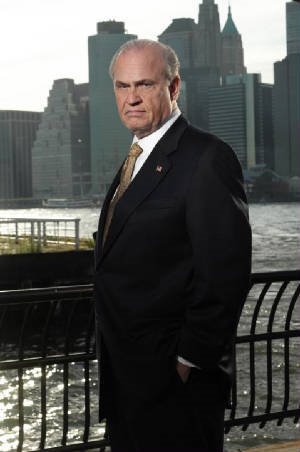
Former U.S. Senator (R-TN)
